Who Gives the Funeral Eulogy? A Complete Guide to Choosing the Right Speaker

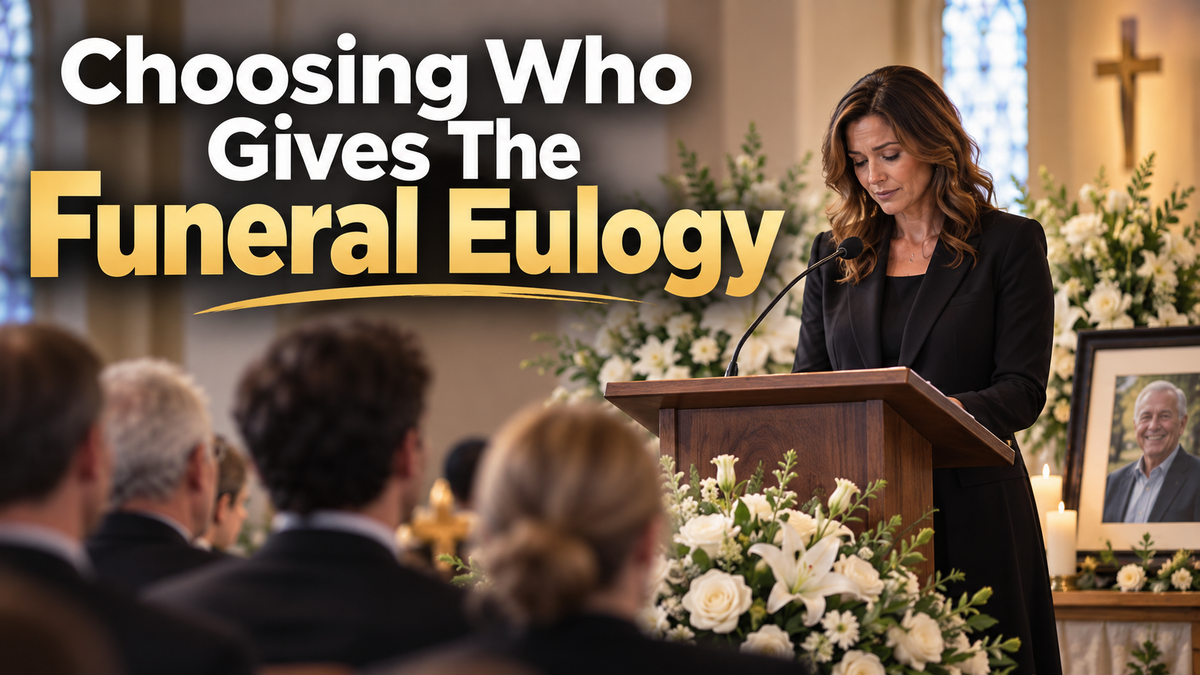
When planning a funeral or memorial service, one of the most heartfelt — and surprisingly high-stakes — moments to plan is the eulogy. But who gives funeral eulogy? This question comes up for nearly every family and friend group as they prepare to honor a loved one's life, and it's rarely as simple as it first appears. The person standing at the front of the room isn't just giving a speech — they're being trusted to tell the story of a life, to capture a personality, and to put into words what a grieving room may be struggling to say themselves. In this comprehensive guide, we'll explore who typically delivers a funeral eulogy, the objective criteria that actually matter more than family rank, how to decide between one speaker or several, and what to consider for a meaningful, well-protected tribute.
Watch the Full Video Guide
What Is a Funeral Eulogy?
A eulogy is a speech delivered during a funeral or memorial service to celebrate and honor the life of the deceased. It often includes personal stories, cherished memories, and reflections on the person's character and legacy. The eulogy is a unique opportunity to share the impact the individual had on family, friends, and the community — and, done well, it helps everyone in the room remember not just how the person died, but how they lived, whom they loved, and the lasting difference they made.
Why This Decision Feels So High-Stakes
Planning a memorial places immense pressure on a grieving family, and the eulogy is often treated as the centerpiece of the entire service — all while the family has only a few days to make the decision. In that compressed timeframe, choosing the speaker can start to feel like a public declaration of who loved the deceased the most. This pressure leads many families toward a dangerous default: letting family rank or public speaking confidence dictate the choice. It's natural to assume the eldest child has the first right to speak, that the surviving spouse is obligated to do it, or that the most confident presenter in the room is automatically the best candidate.
But acute grief affects breathing, concentration, and physical stability. The person with the deepest bond to the deceased is often the least capable of standing before a crowd in that moment. Conversely, a polished, confident presenter might deliver a flawless speech while only knowing a narrow slice of the person's life. Choosing the right speaker means relying on more objective criteria rather than assumptions about obligation or hierarchy.
Traditional Knowledge vs. Readiness: The Real Trade-Off
Every family navigating this decision has to balance a candidate's intimate knowledge of the deceased against their actual ability to deliver a speech while grieving. Defaulting to strict family hierarchy — expecting a devastated spouse or eldest child to speak simply because tradition says they should — honors convention but creates real risk, including the possibility of an emotional collapse at the podium in front of the whole room.
A stronger approach looks instead for a candidate with solid character, an understanding of family boundaries, and a genuine willingness to collaborate with others in preparing the tribute. Relying on these traits — rather than birth order or marital status — helps neutralize arguments over who "loved the deceased more." It does mean the family may need to firmly but kindly hold boundaries with relatives who feel entitled to the microphone, but prioritizing the emotional safety of the gathering over rigid hierarchy ensures the story is told with dignity, even if the primary mourner remains completely silent.
Who Traditionally Gives the Funeral Eulogy?
Traditionally, the eulogy is given by someone who had a close relationship with the deceased. This could be a family member, a close friend, or sometimes a religious leader. The choice often depends on the family's wishes and the customs of their faith or culture. Here's a helpful table outlining common choices:
| Role | Typical Relationship | Why Chosen |
|---|---|---|
| Immediate Family | Spouse, child, sibling, parent | Deep personal connection, firsthand stories |
| Close Friend | Lifelong friend, confidant | Unique perspective, shared experiences |
| Religious Leader | Pastor, priest, rabbi, etc. | Spiritual guidance, comfort, tradition |
| Colleague or Mentor | Work associate, teacher | Professional achievements, mentorship |
How Many Speakers Should There Be?
Once a family moves past the question of who speaks, a second logistical question follows close behind: how many people should be handed the microphone? There are generally three formats to consider.
A single speaker offers a clean, unified narrative but places the entire emotional and logistical weight on one person. A co-eulogy, where two or three people share the responsibility, eases the pressure on any single individual and allows friends and family to represent different chapters of a complex life — though it demands centralized coordination, with one person acting as an informal editor and enforcing strict time limits (typically 2–3 minutes each) to avoid schedule overruns. An open mic format, where the floor is left open for unplanned sharing, feels highly democratic and inclusive, but surrendering that control can invite long, rambling speeches or, in more difficult family situations, the airing of private secrets or unresolved grievances during a formal service. Richer, more cohesive tributes tend to rely on some level of structure and coordination, even when multiple voices are involved.
How to Choose Who Gives the Eulogy
Choosing the right person to deliver the eulogy is a personal decision. Here are some important factors to consider:
- Comfort with Public Speaking: The person should feel reasonably able to speak in front of a group, even during an emotional time — though a trembling voice or a pause for tears is never disqualifying.
- Relationship with the Deceased: Select someone who knew the person well and can share meaningful, specific stories rather than general facts.
- Willingness: Not everyone feels able to speak at a funeral, and that's completely valid. Always ask, and respect the answer without pressure.
- Multiple Speakers: Sometimes more than one person shares the eulogy, offering different perspectives and memories from different parts of the person's life.
For a deeper look at this topic, including a full framework for navigating difficult family dynamics, watch our in-depth video guide on choosing a eulogy speaker.
Protecting Whoever Is Chosen: A Simple Support Protocol
Once a speaker (or speakers) has been chosen, the family's job shifts from selecting the eulogist to protecting them. A few simple steps go a long way: have the speaker rehearse the eulogy aloud beforehand, bring a physically printed copy rather than relying on a phone, and assign a backup reader who holds an identical copy of the script. Knowing that a backup is ready reduces the pressure on the primary speaker considerably — they can step up to the podium with the confidence that the tribute will be completed even if they need to pause or step away partway through. This bit of structural preparation, though it can feel like homework during one of the worst weeks of someone's life, builds a genuine safety net that lets the speaker be more present rather than anxious.
Modern Trends: Who Can Give a Eulogy?
Today, there are fewer rigid rules about who gives a funeral eulogy. Some families invite several people to share memories, while others may ask a professional celebrant to help. The most important thing is that the eulogy feels authentic and honors the life of the loved one.
- Adult Children: Often chosen for parents, sharing heartfelt stories from childhood to adulthood.
- Grandchildren: Sometimes older grandchildren speak, offering a unique generational perspective.
- Friends or Community Members: Especially if the deceased was active in clubs, organizations, or volunteer work.
Some families even invite guests to share brief memories during the service, making the eulogy a collective tribute rather than a single formal address.
Tips for Delivering a Meaningful Eulogy
If you are asked to give a eulogy, here are some helpful tips:
- Write your speech in advance and practice it aloud.
- Keep it personal and sincere — share stories, not just facts.
- Speak slowly and clearly, allowing time for emotion.
- It's okay to show emotion — pausing or shedding tears is natural, and often makes the tribute feel more genuine, not less polished.
- End with a message of hope, gratitude, or a favorite quote.
Frequently Asked Questions About Funeral Eulogies
| Question | Answer |
|---|---|
| Can more than one person give a eulogy? | Yes, multiple speakers can share the eulogy, or several people can offer short tributes. |
| Is it okay to decline giving a eulogy? | Absolutely. It's important to be honest about your comfort level — declining doesn't reflect a lack of love, and those memories can still be written down or read by someone else. |
| How long should a eulogy be? | Typically 5–10 minutes, but it can vary based on the service and family wishes. For multiple speakers, 2–3 minutes each helps keep the service on schedule. |
| What if the closest family member can't speak? | Releasing a devastated spouse or child from the perceived duty to speak is one of the most caring choices a family can make. Their memories can still be included, written down, or read aloud by someone who feels more able to stand before the gathering. |
Quick Tips (Short Videos)
Additional Resources for Funeral Eulogies
For more guidance on funeral planning and eulogy writing, visit The Funeral Program Site. You can also explore helpful videos on our YouTube channel for inspiration and support.
For more support and resources, read the full support article.
Want to see a shorter version? view the Google Doc version.
Conclusion
Deciding who gives funeral eulogy is a deeply personal choice — and, as this guide has shown, it's not really about selecting the closest relative, the most confident speaker, or the person who expects the honor by default. It's about choosing someone who truly understood the deceased, can share meaningful memories with compassion, and feels genuinely prepared to speak on behalf of everyone who is grieving. The best eulogist doesn't need a flawless performance; a trembling voice or a heartfelt pause can make a tribute feel more real, not less. Take your time, consider your options with care, and remember that there is no single right answer — only what feels most meaningful and protective for your family and community.