Can Cremation Ashes Get Mixed Up? A Complete Guide to Crematory Safeguards

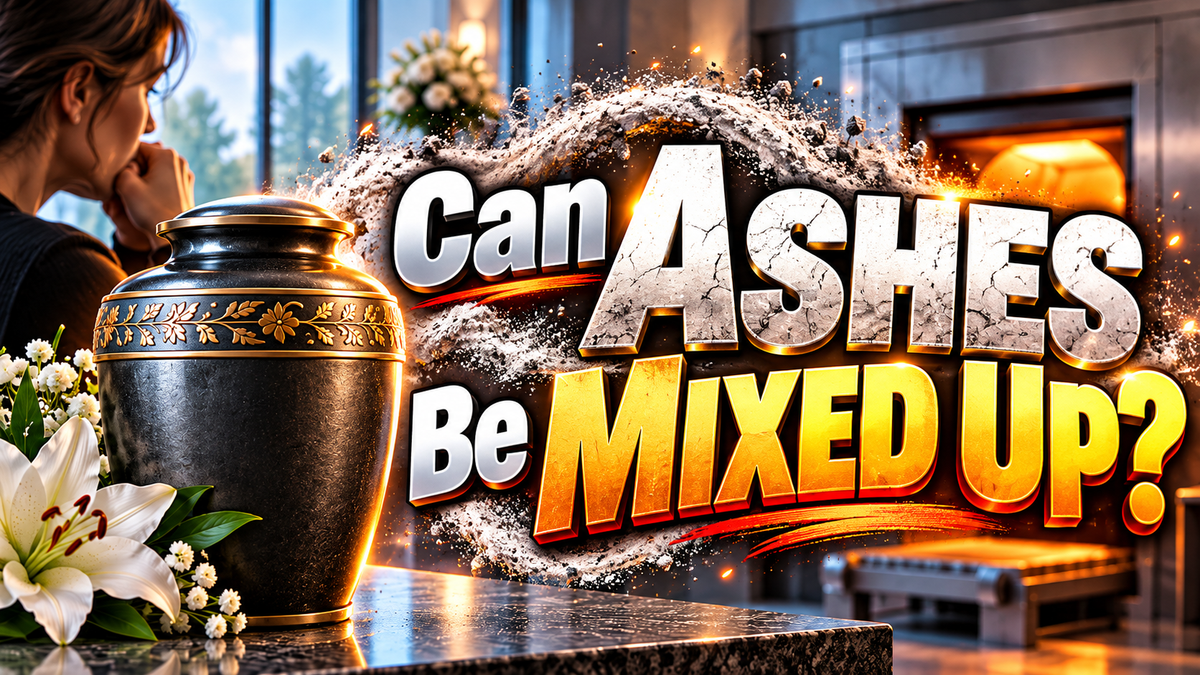
When you entrust a loved one to a crematory, you're trusting that the ashes you receive back belong to them and only them. Yet many families quietly wonder: can cremation ashes get mixed up? It's a natural worry, and an important question to ask.
This guide explains how cremation works, the identification and tracking safeguards crematories use, what the law requires, the honest truth about the small risks that exist, and the steps you can take for real peace of mind.
Watch the Full Video Guide
How the Cremation Process Works
Understanding the process helps explain how mix-ups are prevented. A typical cremation follows these steps:
- Identification and paperwork: The family or authorized agent signs a cremation authorization form, and the deceased is formally identified. Many states require a waiting period, often 24 to 48 hours, before cremation can take place.
- Preparation: Jewelry is removed (unless the family requests otherwise), and medical devices such as pacemakers are taken out, since they can be hazardous in the chamber.
- Cremation: The body, in a combustible container, is placed in the cremation chamber (called a retort), where intense heat reduces it to bone fragments.
- Cooling and processing: After cooling, the remains are carefully swept from the chamber. Metal from surgical implants is removed, and the bone fragments are processed into the fine, sand-like material families receive.
- Return: The cremated remains are placed in a labeled container or urn and returned to the family or funeral home.
The Safeguards That Keep Ashes Separate
Reputable crematories use several overlapping layers of protection:
| Safeguard | How It Protects Your Loved One |
|---|---|
| Metal ID disc | A numbered, heat-resistant metal disc travels with the body into the chamber, survives cremation, and is returned with the ashes |
| Chain-of-custody records | Logs and signatures document who handled the remains, when, and where at every step |
| One cremation at a time | State laws generally prohibit cremating more than one body in a chamber at once without family authorization |
| Chamber cleaning | The retort is swept out thoroughly after each cremation before the next one begins |
| Labeled containers | Remains stay in identified containers during cooling, processing, and return |
| Trained operators | Many operators complete certification programs covering safe, ethical handling of remains |
| State inspections | Crematories are licensed and regulated by state agencies, which can inspect facilities and records |
So, Can Ashes Get Mixed Up?
The honest answer: a true mix-up is rare, but not impossible. When problems happen, they're almost always caused by human error, such as mislabeling or skipping required steps, or, in a few notorious cases, outright misconduct. One of the most infamous examples was the Tri-State Crematory scandal in Georgia in 2002, which led many states to strengthen their cremation laws and oversight.
In a licensed facility that follows its procedures, the risk of receiving someone else's remains is extremely low.
A note about trace residue
There's one detail many families aren't told. Even with careful cleaning, it's physically impossible to remove every microscopic particle from a cremation chamber. A tiny amount of residue from previous cremations can unavoidably remain. Many cremation authorization forms acknowledge this. It's very different from a mix-up: the remains you receive are your loved one's, but they may not be 100 percent free of trace particles.
Laws and Regulations
- State licensing: Crematories are regulated at the state level, often by a state funeral board or a cemetery and funeral bureau. Rules vary from state to state.
- One body at a time: Most states prohibit cremating more than one person in a chamber at the same time unless the family gives written permission, for example, for a mother and infant or, in some cases, spouses.
- Authorization: A legally authorized person must sign off before cremation can proceed.
- Waiting periods: Many states require a set amount of time to pass after death before cremation.
- Recordkeeping: Crematories must typically keep detailed records that regulators can review.
How to Protect Your Loved One: A Family Checklist
- Choose a licensed, reputable provider. Verify licensing with your state board, read reviews, and ask for references.
- Ask whether the funeral home owns its crematory. If cremation is outsourced to a third-party crematory, ask which one, and whether you can visit.
- Ask about identification procedures. How do they track remains? Do they use a metal ID disc? Will it be returned with the ashes?
- Ask about staff training. Are operators certified through an industry program?
- Consider a witnessed cremation. Many crematories allow family members to be present as the body is placed in the chamber. There may be an additional fee.
- Request documentation. Ask for a copy of the cremation authorization and a certificate of cremation.
- Look for the ID disc. When you receive the remains, check that the disc number matches the crematory's records.
Frequently Asked Questions
Can two people be cremated at the same time?
Generally no. Most state laws prohibit cremating more than one body in a chamber at the same time unless the family gives written permission, such as for a mother and infant.
How do I know the ashes are really my loved one's?
Most crematories place a numbered metal ID disc with the body throughout the process and return it with the ashes. Ask the crematory to explain their chain-of-custody records, and check that the disc number matches their paperwork.
Can DNA testing confirm whose ashes they are?
Usually not. The high heat of cremation destroys most DNA, so testing cremated remains is rarely successful. That's why the identification and tracking process matters so much.
Will there be any residue from other cremations?
Possibly a microscopic amount. Chambers are swept between cremations, but no method removes every particle. This trace residue is different from an actual mix-up.
What should I do if I suspect a mix-up?
Contact the funeral home and crematory right away and ask to review their records. If you're not satisfied, file a complaint with your state's funeral or cemetery regulatory board, and consider speaking with an attorney.
Embedded JavaScript
Quick Tips (Short Videos)
Listen to the Podcast Episode
Prefer to listen? This episode of The Funeral Channel Podcast covers how crematories prevent mix-ups and what families should ask before choosing a provider.
More Resources
- Watch the complete video guide on YouTube.
- Read our companion article on whether cremation ashes can be mixed up.
- Read the full support article.
- Download the printable Google Doc version.
- Explore our YouTube channel for more on cremation and funeral planning.
Final Thoughts
It's completely normal to worry about whether the ashes you receive truly belong to your loved one. The reassuring news is that licensed crematories use multiple safeguards, including metal ID discs, chain-of-custody records, one-at-a-time cremation, and careful cleaning, to keep every person's remains separate. By choosing a reputable provider, asking direct questions, and keeping your documentation, you can move forward with confidence that your loved one has been cared for with dignity and respect.
About the Author: Christi Anderson is the founder of The Funeral Program Site and The Funeral Channel Network, and a published author dedicated to helping families navigate funeral planning and end-of-life traditions with compassion and clarity.