What Happens at a Memorial Service: A Complete Guide for Families and Friends

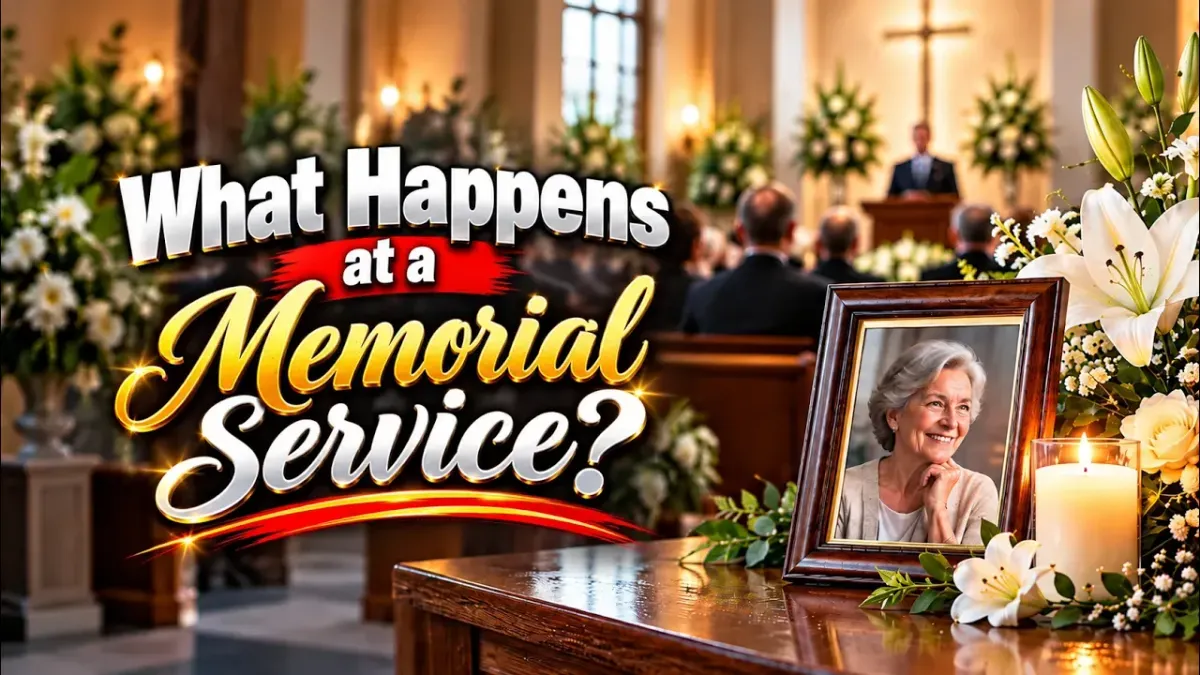
When someone we love dies, coming together to remember them is one of the most important steps in healing. A memorial service gives family and friends a place to share stories, offer comfort, and celebrate a life that mattered. But if you've never planned or attended one, you may not know what to expect.
This guide explains what happens at a memorial service, how it differs from a funeral, a sample order of service, ideas for personalizing it, etiquette for guests, and a simple planning checklist for families.
Watch the Full Video Guide
What Is a Memorial Service?
A memorial service is a gathering held to honor and remember someone who has died, without the body present. Sometimes the cremated remains are displayed in an urn; other times there's simply a photo, flowers, and personal mementos.
Because there's no need to schedule around a burial or a casket, memorial services can take place days, weeks, or even months after a death. That flexibility lets families gather when everyone can travel, choose a meaningful location, and plan a deeply personal tribute.
Memorial Service vs. Funeral vs. Celebration of Life
| Funeral | Memorial Service | Celebration of Life | |
|---|---|---|---|
| Body present? | Yes, usually in a casket | No (an urn may be present) | Usually not |
| Timing | Typically within a week or two of death | Flexible: days to months later | Flexible |
| Tone | Often formal and traditional | Reflective, can be formal or relaxed | Usually upbeat and personal |
| Location | Funeral home or place of worship, then cemetery | Almost anywhere | Almost anywhere, often a favorite place |
The lines between memorial services and celebrations of life often blur. Many families use the terms interchangeably. What matters most is that the gathering fits your loved one and your family.
What Happens at a Memorial Service
Every service is unique, but most include some or all of these elements:
- Welcome: An officiant, clergy member, celebrant, or family member greets guests and sets the tone.
- Readings: Poems, scripture, or meaningful passages that reflect the person's life and values.
- Eulogy and tributes: One or more people share the life story, and others may offer short memories.
- Music: Favorite songs, hymns, live performances, or a curated playlist.
- Photo or video tribute: A slideshow or montage celebrating moments across a lifetime.
- Moment of silence or prayer: A pause for reflection, prayer, or meditation.
- Open sharing: Some families invite anyone who wishes to come forward and share a memory.
- Closing words: A final thank-you, blessing, or meaningful closing ritual.
- Reception: Food and conversation afterward, where guests can connect and comfort the family.
Sample Memorial Service Order
A typical memorial service lasts 30 to 60 minutes. Here's a simple outline you can adapt:
- Prelude music as guests arrive
- Welcome and opening words
- Opening reading, prayer, or poem
- Life story or eulogy
- Musical selection
- Tributes from family and friends
- Photo or video slideshow
- Open sharing of memories (optional)
- Moment of silence or closing prayer
- Closing words and closing ritual
- Recessional music and invitation to the reception
A printed memorial program with the order of service, a photo, and a short life story helps guests follow along and gives them a keepsake to take home.
Where Can a Memorial Service Be Held?
- Funeral homes
- Churches, temples, mosques, or other places of worship
- Community centers or event halls
- Family homes or backyards
- Parks, beaches, gardens, or other outdoor spaces (check whether permits are needed)
- A favorite restaurant, club, or meaningful place in the person's life
- Online or hybrid, with a livestream for those who can't travel
Ways to Personalize a Memorial Service
- Memory table: Display photos, awards, hobby items, or a favorite hat or book.
- Music that tells their story: Play the songs they loved, not just traditional funeral music.
- Memory cards or book: Ask guests to write a memory for the family to keep.
- Candle lighting: Invite family members or all guests to light a candle in remembrance.
- Living tributes: Plant a tree, hand out seed packets, or release bubbles. Many families now avoid balloon releases, which harm wildlife and are restricted in some areas.
- Theme or dress code: Ask guests to wear a favorite color or team jersey.
- Favorite food: Serve their signature dish or favorite treats at the reception.
- Charitable giving: Suggest donations to a cause they cared about in lieu of flowers.
Planning Checklist for Families
- Choose a date, time, and location
- Decide on an officiant or host
- Invite speakers and musicians
- Select readings, music, and photos
- Create a slideshow or memory display
- Prepare and print a memorial program
- Share details through an obituary, email, social media, or invitations
- Arrange a reception, food, and seating
- Set up livestreaming if needed
- Ask a friend to manage the guest book and help with setup
What to Expect as a Guest
If you're attending, you don't need to do anything special. Just show up with an open heart. A few pointers:
- Dress: Follow any dress code the family shares. Otherwise, neat, modest clothing in muted colors is a safe choice.
- Arrival: Arrive a few minutes early to sign the guest book and find a seat quietly.
- Participation: Join in songs or prayers as you feel comfortable. If there's an open sharing time, you're welcome to speak, but you don't have to.
- Phones: Silence your phone, and don't take photos unless the family invites it.
- Gifts: Flowers, a sympathy card, or a donation in the person's name are thoughtful, especially if the family requested one.
Supporting the Family
A memorial service is as much about caring for the living as it is about honoring the dead. A hug, a kind word, or simply listening can mean more than you realize. If you're not sure what to say, "I'm so sorry for your loss" or "I'll always remember…" followed by a short memory is always appropriate. Afterward, a follow-up call or card in the weeks ahead can be a real comfort.
Frequently Asked Questions
How long does a memorial service last?
Most last 30 to 60 minutes, with a reception afterward that may go on longer.
Can a memorial service be held anywhere?
Yes. Homes, parks, places of worship, community centers, restaurants, and funeral homes are all common choices. Outdoor public spaces may require a permit.
Is it okay to bring children?
Usually, yes. Memorial services are often family-friendly, but check with the hosts if you're unsure.
Do I need to bring anything?
Your presence matters most. If the family requested donations instead of flowers, a card noting your gift is a thoughtful touch.
Can the ashes be present at a memorial service?
Yes. Many families display the urn as a focal point, though it's entirely optional.
Quick Tips (Short Videos)
Listen to the Podcast Episode
Prefer to listen? This episode of The Funeral Channel Podcast explores the structure, meaning, and etiquette of memorial services.
Embedded JavaScriptEmbedded iFrame
More Resources
- Watch the complete video guide on YouTube.
- Read the full support article.
- Find memorial program templates and planning tools at The Funeral Program Site.
- Browse more videos on our YouTube channel.
Final Thoughts
A memorial service is a powerful way to honor a life, gather the people who loved them, and begin to heal together. Whether you're planning one or attending, there's no single "right" way. What matters is creating a space where memories, love, and support can be freely shared. With a little planning and a lot of heart, a memorial service can become a truly fitting tribute.
About the Author: Christi Anderson is the founder of The Funeral Program Site and The Funeral Channel Network, and a published author dedicated to helping families navigate funeral planning and end-of-life traditions with compassion and clarity.