Top Headstone Cleaning Mistakes to Avoid: A Complete Guide to Preserving Your Loved One's Memorial

Headstones serve as lasting tributes to those we love, marking their memory for generations. Over time, however, these memorials can become stained, weathered, or covered in biological growth. While it's natural to want to restore their appearance, improper cleaning can cause irreversible damage. In this comprehensive guide, we'll explore the most common headstone cleaning mistakes, the correct step-by-step technique professionals actually use, and how to avoid causing permanent harm — ensuring your loved one's memorial remains a respectful and lasting tribute.
Watch the Full Video Guide
Why Proper Headstone Cleaning Matters
Headstones are crafted from materials such as granite, marble, limestone, sandstone, slate, and bronze, each requiring specific care. Older markers in particular were often carved from marble, sandstone, or slate — highly porous materials that naturally soften after decades of exposure to rain and freezing temperatures. Cleaning them incorrectly can lead to erosion, discoloration, or even breakage that can never be reversed.
The most important mindset shift is understanding that the goal isn't restoring a monument to a pristine, bright-white condition. A gentle cleaning that removes loose dirt while leaving the stone structurally intact — even if it still carries the softened edges and subtle discoloration of age — is the safest and most successful outcome. Weathering is, in a real sense, the physical record of the monument's history.
Before You Begin: Three Prerequisites
Before gathering any supplies, there are three things worth confirming first:
- Permission: Verify you have explicit permission from the cemetery to clean the marker — many cemeteries have specific rules about what's allowed.
- Weather: Choose a mild, overcast day. Avoid extreme heat or freezing temperatures, both of which can affect how the stone and cleaning products react.
- A conservative toolkit: Gather only the minimal, gentle supplies described below — resist the urge to bring anything from the household cleaning aisle.
Step One: Inspect Before You Touch
Never pour liquids or apply pressure to a headstone until you've confirmed it's structurally sound. Walk around the entire monument looking for open seams or widening cracks, then apply a very light touch to the sides. If the marker rocks, tilts, or shifts on its base, stop immediately — this is a sign of a serious structural issue, not something to clean around.
Also look closely at the surface itself. On sandstone, advanced deterioration often looks like thin, brittle layers separating and peeling away from the core. On marble, similar deterioration can appear as a sugary, granular powder on the surface. If you introduce water and a brush to either of these conditions, you risk detaching fragile fragments permanently.
If the stone appears solid, take clear "before" photographs — a full front view, the back, both side profiles, and close-ups of any existing minor damage. This creates a baseline you can compare against later, and it's the first step toward documentation-based, long-term stewardship rather than a one-time scrub. If a monument leans, moves to the touch, or is actively shedding material, stop your work, document what you see, and contact a professional monument conservator.
Most Common Headstone Cleaning Mistakes
| Mistake | Why It's Harmful |
|---|---|
| Using Harsh Chemicals | Bleach deposits harmful salts into porous rock, trapping moisture and encouraging faster biological regrowth. Vinegar and other acidic cleaners react with calcium-based minerals and physically etch the stone surface. |
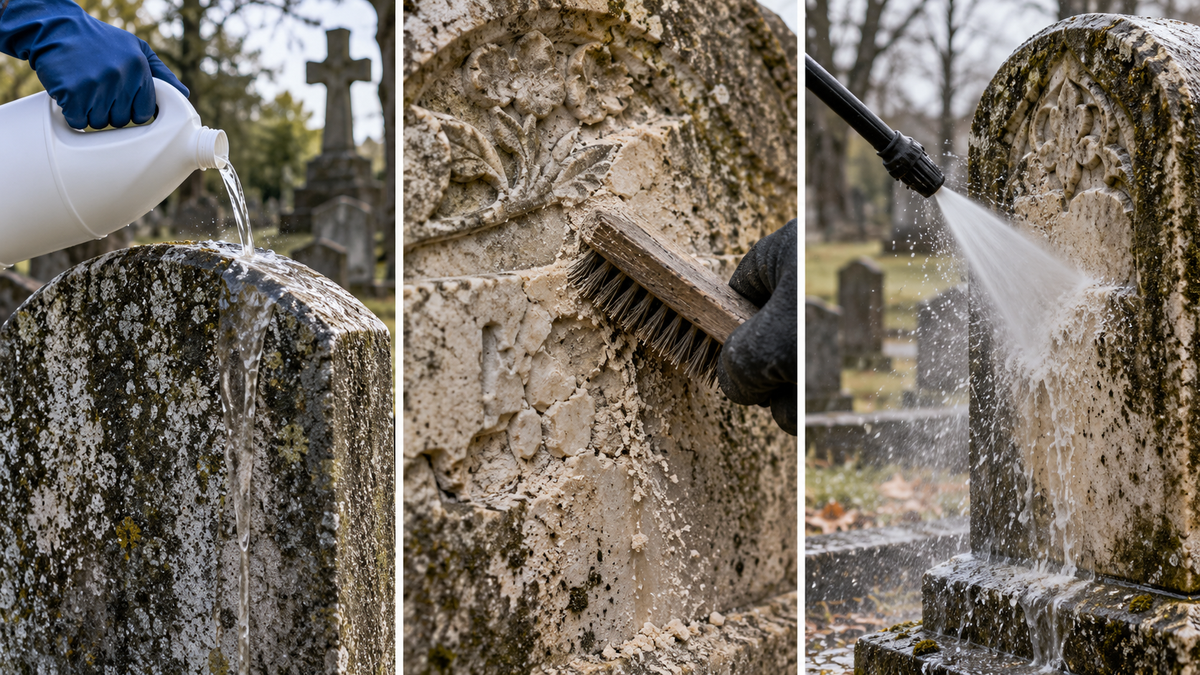
| Power Washing | High-pressure water can crack, chip, or loosen fragile stones and engravings, especially on older or weathered markers. |
| Scrubbing with Hard Brushes | Wire or stiff brushes physically sand away the stone's surface — and on a weakened, porous marker, this means sanding away the original inscription itself. |
| Cleaning Too Frequently | Every physical intervention introduces cumulative wear. Headstones don't benefit from routine annual scrubbing — the longer you can safely go between cleanings, the better the stone fares over decades. |
| Forcing Off Moss or Growth | Aggressively scraping dry moss, lichen, or algae pulls the weakened top layer of stone off along with it. |
| Using Metal Picks on Lettering | The inner edges of older carved inscriptions are highly fragile — prying at them with a metal tool can chip or widen the lettering permanently. |
The Correct Cleaning Technique, Step by Step
Plain, clean water is the most effective tool in your kit, capable of lifting most surface debris without the risks of chemical intervention. A safe preservation kit needs only clean water, a bucket, a hand-pump sprayer, several soft natural or synthetic-bristle brushes, and wooden craft sticks or plastic scrapers.
- Pre-wet from the bottom up. Apply water starting at the lower sections of the stone first. This creates a saturated barrier — when you later wash the top, dirty runoff glides over the wet lower area instead of soaking into dry stone and leaving permanent streaks.
- Keep the stone wet as you work. Clean in small sections, using minimal pressure with your softest brush in a gentle circular motion. Rinse the brush frequently so you're not dragging hard mineral grit back across the surface.
- Use a smaller, softer brush for lettering. A toothbrush-style brush works well for recessed inscriptions. Never use metal picks or hard tools to dig dirt out of carved letters.
- Let water do the work on stubborn spots. If a patch of soil resists your brush, apply more water and give it time to soften rather than increasing physical pressure.
- Handle moss and lichen with patience. Heavily saturate the growth with water and let it sit for several minutes to loosen its grip. Once softened, slide a plastic scraper or wooden craft stick under the thickest patches and glide it horizontally — never dig or gouge. If it resists, stop.
- For deep staining, use a preservation-grade biocidal cleaner formulated specifically for cemetery monuments, following the manufacturer's exact dilution and dwell-time instructions. These products often take days or weeks to fully work — patience protects the stone, while forcing immediate results through friction damages it.
- Finish with a heavy top-down rinse to wash away any suspended soil so nothing dries back onto the stone's face.
One important note: don't judge your results while the stone is still wet. A saturated stone looks artificially dark, while the same stone once fully dry reveals a softer, truer appearance. Judging a wet monument often leads to unnecessary extra scrubbing. Once it's dry, take your "after" photos using the same angles as your original baseline shots.
Material-Specific Cleaning Tips
- Granite: Durable, but still avoid acidic or abrasive cleaners. Rinse thoroughly with water.
- Marble: Softer and more porous; use only water and a soft brush. Avoid all chemicals — marble is especially prone to etching and surface powdering.
- Limestone/Sandstone: Extremely porous; avoid all chemicals and use minimal water to reduce absorption, moving gently and patiently.
- Slate: Prone to delaminating in thin layers when deteriorated — inspect carefully before cleaning, and stop immediately if you see any flaking.
- Bronze: Use a mild soap and soft cloth; avoid metal polish unless specifically recommended by a professional.
When to Call a Professional
If the headstone is severely stained, cracked, unstable, flaking, or shedding material, it's best to consult a monument restoration expert rather than continue cleaning. Attempting repairs or aggressive cleaning on fragile stones can cause permanent, irreversible damage. Professionals have the training, tools, and product knowledge to restore headstones safely and respectfully — and knowing when to stop and call for help is itself part of doing this right.
Frequently Asked Questions
- How often should I clean a headstone? Most experts recommend cleaning no more than once a year, and often less — the longer you can safely go between cleanings, the less cumulative wear the stone experiences.
- Can I use vinegar or bleach? No. Both are too harsh and can cause permanent damage to most stone types — bleach deposits damaging salts, and vinegar chemically etches calcium-based stone.
- What if the headstone is unstable or cracked? Do not attempt to clean or repair it yourself. Document what you see with photos and contact a professional monument conservator.
- Do I need permission from the cemetery before cleaning? Yes — always check with the cemetery first, since many have specific rules or restrictions about cleaning methods and products.
- Why does the stone look darker right after cleaning? Wet stone always appears darker than it really is. Wait until it's fully dry before judging your results or deciding whether more cleaning is needed.
- Is it okay to use a pressure washer for a faster clean? No — high-pressure water can crack, chip, or loosen fragile stone and engravings, especially on older or already-weathered markers.
Expert Resources and Support
For more in-depth information on headstone care, listen to our podcast episode below. You can also read the full support article for a comprehensive overview and more expert tips.
Embedded JavaScript
Quick Tips (Short Videos)
Additional Resources
Preserving a loved one's headstone is an act of respect and remembrance. By avoiding these common headstone cleaning mistakes, following the step-by-step technique above, and knowing when to call in a professional, you ensure the memorial remains a beautiful, structurally sound tribute for years to come. For more support, visit our brand resource page and explore our full range of memorial care guides.
Conclusion
Headstone cleaning is about more than just appearance — it's about honoring a legacy while protecting the physical link between a family's history and the stone itself. A little restraint today can prevent irreversible damage tomorrow. By learning what not to do, following the gentle techniques outlined above, and knowing when to step back and call a professional, you help preserve your loved one's memory — and their name, carved in stone — for the generations who will visit after you. For more tips and support, explore our YouTube channel and connect with our community of caring families and professionals.