Cremation Ashes in Glass: Turning a Loved One's Memory into Art

Honoring a loved one's memory is a deeply personal journey. For generations, families have relied on traditional urns to hold cremated remains, but storing a loved one out of sight doesn't always bring comfort. More families are looking for something they can interact with — an everyday object they can hold, display, and watch catch the light. That search has led many to cremation ashes in glass, a unique and beautiful way to preserve the essence of someone special by turning a small portion of cremated remains into a stunning, handcrafted piece of art. This guide explores exactly how the process works, the science behind it, the customization options available, and how to choose the right provider for a keepsake that celebrates life and legacy.
Watch the Full Video Guide
What Are Cremation Ashes in Glass?
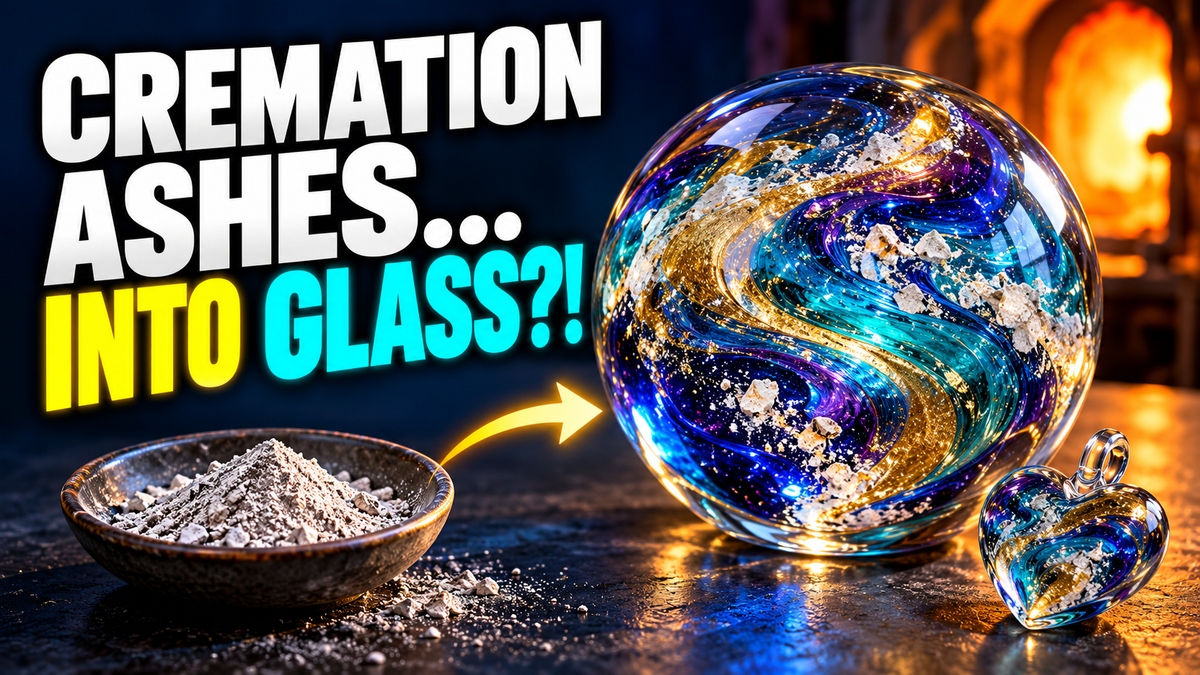
Cremation ashes in glass is an artistic process where a small amount of cremated remains is carefully fused into molten glass. The result is a permanent, decorative keepsake that can take the form of pendants, paperweights, orbs, or custom sculptures. Each piece is handcrafted, ensuring that no two memorials are exactly alike. The swirling patterns and vibrant colors within the glass often symbolize the journey of life, making each keepsake a unique tribute to your loved one.
Debunking the "Ashes to Glass" Myth
The phrase "ashes to glass" can be slightly misleading. It sounds like remains are simply pushed into a hot furnace and melted down until they turn into glass — but that's not actually what happens. Cremated remains are processed, mineralized bone fragments that do not melt at the temperatures used in a glass-making studio. Instead, they behave as rigid, heat-resistant particles that flow very differently from the smooth, molten glass surrounding them.
The real artistic challenge is introducing those rigid mineral particles into a roughly 2,000-degree fluid medium. The particles don't dissolve — instead, the molten glass flows around them, trapping and suspending the fragments within a solid matrix. Navigating that chemical interaction takes immense precision, since the material doesn't behave like ordinary color. This is what makes the work a highly skilled, high-stakes artistic commission rather than a simple manufacturing process.
Types of Cremation Ashes in Glass Keepsakes
| Type | Description | Popular Uses |
|---|---|---|
| Glass Pendants | Wearable art pieces containing ashes | Necklaces, keychains |
| Paperweights | Decorative glass objects for desks or shelves | Home or office display |
| Glass Orbs | Spherical keepsakes with swirling colors and ashes | Mantelpieces, memorial tables |
| Custom Sculptures | Personalized glass art in various shapes | Unique home décor |
Before the Heat: Choosing a Shape and Color Story
The process actually starts far away from any furnace. It begins with the family selecting a shape — a teardrop pendant, a display paperweight, or something else entirely — and choosing a color palette that tells a specific emotional story. Some families choose the blues and greens of a favorite ocean; others choose brilliant reds to reflect a vibrant, energetic personality. From there, the logistics require careful handling: only a small, carefully measured portion of the remains is needed, so families ship just that small amount rather than the full urn.
Chain of Custody: Handling the Remains With Respect
Because these materials can never be replaced, reputable studios establish a strict chain of custody. Every shipment is immediately logged, labeled with a unique identifier, and physically separated from other orders to prevent any possibility of a mix-up. Given the emotional weight of the work, this kind of procedural integrity has to be established before a single piece of glass is ever heated.
The Process: How Are Ashes Incorporated Into Glass?
Inside the studio, often called the "hot shop," furnaces run at roughly 2,000 degrees. At this temperature, molten glass moves and glows like liquid honey, requiring an artist trained to work with entirely specialized steel tools. The process typically unfolds like this:
- Gathering the foundation. The artist begins by collecting a small, clear core of molten glass on the end of a blowpipe. This luminous mass becomes the structural foundation of the piece, and the artist rotates it constantly to keep it centered.
- Matching compatible glass. The colored glass and the clear glass must have identical expansion rates. If one material contracts even slightly faster than the other as it heats and cools, the finished piece can crack. Only carefully compatible colors are melted and twisted together to establish the emotional palette of the memorial.
- Adding the ashes. This is the most critical step. The artist presses the roughly 2,000-degree glass gather directly over the carefully measured cremated remains. This triggers an immediate reaction as trapped air creates tiny bubbles, and fine, milky clouds form around the pale particles. Because these variables are nearly impossible to control perfectly, no two pieces can ever be truly identical.
- Encasing and shaping. To fully protect the design, the artist gathers another thick layer of molten clear glass over the top. This second layer acts like a magnifying lens, stretching the ash particles into deep, three-dimensional spirals as the piece is shaped.
For a detailed look at the process, you can watch our full video guide.
Annealing: Preventing Thermal Shock
Once shaping is finished, the piece is still dangerously hot, and simply setting it on a table to cool would destroy it. If left to cool too quickly, the exterior of the glass cools and shrinks much faster than the interior. That difference in temperature creates massive internal tension pulling against the outer shell, and the piece can crack or shatter entirely.
To prevent this, the finished piece is placed into an annealing oven, which slowly brings the temperature down over several hours or, in some cases, days. The visual spectacle happens in the hot shop, but the true craftsmanship lies in this invisible, patient management of physics that ensures the memorial survives intact.
Final Polish and Inspection
After the glass has safely reached room temperature, the artist grinds and polishes the piece to complete it, followed by a final inspection before it's securely packaged and shipped back to the family. What the family receives looks entirely different from what they sent: the once-loose, granular ash has been permanently integrated into a heavy, smooth, vibrant piece of fine art.
Why Choose Glass Memorials?
Unlike traditional urns, glass memorials are designed to be displayed and cherished in everyday life. These keepsakes blend artistry with sentimentality, offering a discreet yet meaningful way to keep your loved one close. Because only a tiny fraction of the material is used in each piece, one person's ashes can be divided so several relatives can each hold a distinct, customized keepsake — while the vast majority of the remains are still available for traditional burial or scattering. The durability of glass ensures your memorial will last for generations, while the ability to personalize colors and shapes lets you reflect the personality and spirit of the departed. When placed in the sun or near a window, the clear glass captures and bends natural light, glowing and revealing hidden depth within the piece.
Personalization and Customization Options
One of the most appealing aspects of cremation ashes in glass is the ability to personalize each piece. Choose from a variety of colors, shapes, and sizes to reflect your loved one's personality. Many artists offer engraving or the inclusion of special symbols, making your memorial truly unique. Whether you prefer a subtle, clear design or a vibrant, colorful swirl, the possibilities are endless.
Benefits of Cremation Ashes in Glass
- Lasting Tribute: Glass is a durable material, ensuring your keepsake will last for generations.
- Artistic Expression: Each piece is handcrafted, making it a unique work of art rather than a mass-produced item.
- Portability: Small glass keepsakes can be easily carried or displayed anywhere in the home.
- Discreet Memorial: Unlike traditional urns, glass art blends seamlessly into everyday home décor.
- Shared Keepsakes: Because only a small portion of ashes is used per piece, multiple family members can each hold their own individual memorial.
Caring for Your Glass Keepsake
A finished memorial glass piece requires very little upkeep, but a few habits will help it stay beautiful for generations. Clean it gently with a soft, dry or slightly damp cloth rather than harsh chemical cleaners, avoid sudden temperature changes (such as moving it from a cold car into a hot room), and display it somewhere it won't be easily knocked off a shelf or ledge. Because the piece is solid glass throughout, everyday dusting is typically all the maintenance it will ever need.
Choosing the Right Provider
When selecting a provider for cremation ashes in glass, it's important to choose an experienced artist who understands the significance of their work. Look for providers who offer clear instructions, secure shipping, a documented chain of custody, and compassionate customer service. Reading reviews and viewing sample galleries can help you find the right fit for your family's needs. For trusted guidance and memorial products, visit The Funeral Program Site.
Frequently Asked Questions
- How much ash is needed? Typically, less than a teaspoon is required for most glass keepsakes — the rest of the remains stay with your family.
- Will the ashes actually melt into the glass? No. Cremated remains are mineralized bone fragments that don't melt at glass-working temperatures. Instead, the molten glass flows around and suspends the particles, permanently encasing them within the piece.
- Is the process safe? Yes, reputable artists handle ashes with care and respect, following a documented chain of custody and ensuring their safe return if any portion goes unused.
- Why does the glass need to cool so slowly? Cooling too quickly causes the outer and inner layers of glass to contract at different rates, creating internal stress that can crack or shatter the piece. A controlled annealing process over several hours (or days) prevents this.
- Can I choose the design? Most providers offer a range of customization options, including colors, shapes, and engraving.
- How long does it take? Depending on the artist, the process can take anywhere from a few weeks to a couple of months.
- Can multiple family members each get a piece? Yes — since only a small portion of ashes is used per keepsake, it's common for several relatives to each commission their own individual piece from the same remains.
Additional Resources
To see the process in action and learn more about cremation ashes in glass, visit the Funeral Program Site YouTube Channel for inspiration. For a quick overview, check out these helpful short videos: Short 1 and Short 2.
Embedded JavaScript
Quick Tips (Short Videos)
For more support and information, read the full support article. To view a printable version, view the Google Doc version.
Conclusion
Cremation ashes in glass offer a meaningful, artistic, and lasting way to honor your loved one. Rather than keeping remains completely out of sight, a small portion is preserved in a tangible object that catches the light — turning a static material into a living, interactive piece of art. Whether you choose a pendant, paperweight, orb, or custom sculpture, these keepsakes provide comfort and connection for years to come. Explore your options and find the perfect tribute that reflects the unique spirit of your loved one.