What Happens to the Soul After Death? A Complete Guide to the Soul’s Journey

Few questions have stirred the human heart as deeply as this one: what happens to the soul after death? Every culture, faith, and generation has wrestled with it. For some, the question comes up in a quiet moment of curiosity. For others, it arrives suddenly, at a bedside or graveside, when someone they love has just taken their last breath. Wherever you are coming from, understanding how people have described the soul's journey can bring comfort, perspective, and a sense of peace.
In this guide, we explore what the soul is, what the world's major religions teach about life after death, what science and philosophy have to say, the stages many traditions describe for the soul's journey, and how these ideas can help you find meaning while grieving. Along the way you will find videos, a podcast episode, and further resources to continue your own exploration.
What Is the Soul?
The soul is commonly understood as the enduring essence of a person: the seat of consciousness, personality, conscience, and identity. It is the part of us many believe continues after the body dies. The word itself carries different shades of meaning across traditions. Ancient Greek thinkers spoke of the psyche, Hebrew scripture of the nephesh, Hinduism of the Atman, and Islam of the ruh.
Despite these differences, most traditions agree on a few core ideas: the soul is more than the physical body, it gives a person their individuality, and its fate after death matters. These shared beliefs form the foundation of afterlife teachings, funeral rituals, and spiritual practices around the world.
Watch the Full Video Guide
Religious Beliefs About the Soul After Death
Religions offer some of the most detailed and time-honored answers to what happens after we die. While each tradition has its own branches and interpretations, the table below summarizes widely held beliefs:
| Religion | Belief About the Soul After Death |
|---|---|
| Christianity | The soul faces judgment and enters Heaven or Hell. Catholic teaching also includes Purgatory, a state of purification before Heaven. Many Christians look forward to the resurrection of the body at the end of time. |
| Islam | The soul is gently or harshly taken by angels, rests in the grave in an intermediate state (Barzakh), and on the Day of Judgment is sent to Paradise (Jannah) or Hell (Jahannam) according to faith and deeds. |
| Judaism | Beliefs vary widely. Many teachings speak of Olam Ha-Ba (the World to Come), a period of purification for the soul, and the eventual resurrection of the dead. Judaism tends to emphasize living righteously now over detailed descriptions of the afterlife. |
| Hinduism | The eternal soul (Atman) is reborn through samsara, the cycle of reincarnation, shaped by karma, until it achieves Moksha, liberation and union with the divine. |
| Buddhism | There is no permanent, unchanging soul (anatta), but a stream of consciousness continues through rebirth until Nirvana, the end of suffering, is reached. Tibetan Buddhism describes an in-between state called the bardo. |
| Sikhism | The soul moves through cycles of birth and death until, through devotion and God's grace, it merges with the divine. |
These beliefs shape how families mourn. They influence how quickly burial takes place, whether cremation is chosen, which prayers are said, and how long mourning periods last.
Scientific and Philosophical Perspectives
Science approaches the soul very differently from religion. Most neuroscientists view consciousness as something produced by the brain, which would mean it ends when brain activity stops. There is currently no empirical evidence that consciousness survives physical death.
Still, the question remains open in philosophy. Dualists, following thinkers like René Descartes, argue that the mind is distinct from the body and could exist independently. Materialists argue that the mind is entirely physical. Others propose middle positions. The so-called "hard problem of consciousness," explaining why we have inner experience at all, remains unsolved.
Near-death experiences (NDEs) add to the conversation. People who have been resuscitated after cardiac arrest sometimes describe floating above their bodies, moving through a tunnel toward a light, feeling deep peace, reviewing their lives, or meeting deceased loved ones. Researchers continue to study these accounts. Skeptics explain them as effects of oxygen loss or brain chemistry, while others see them as glimpses of something beyond.
Stages of the Soul's Journey After Death
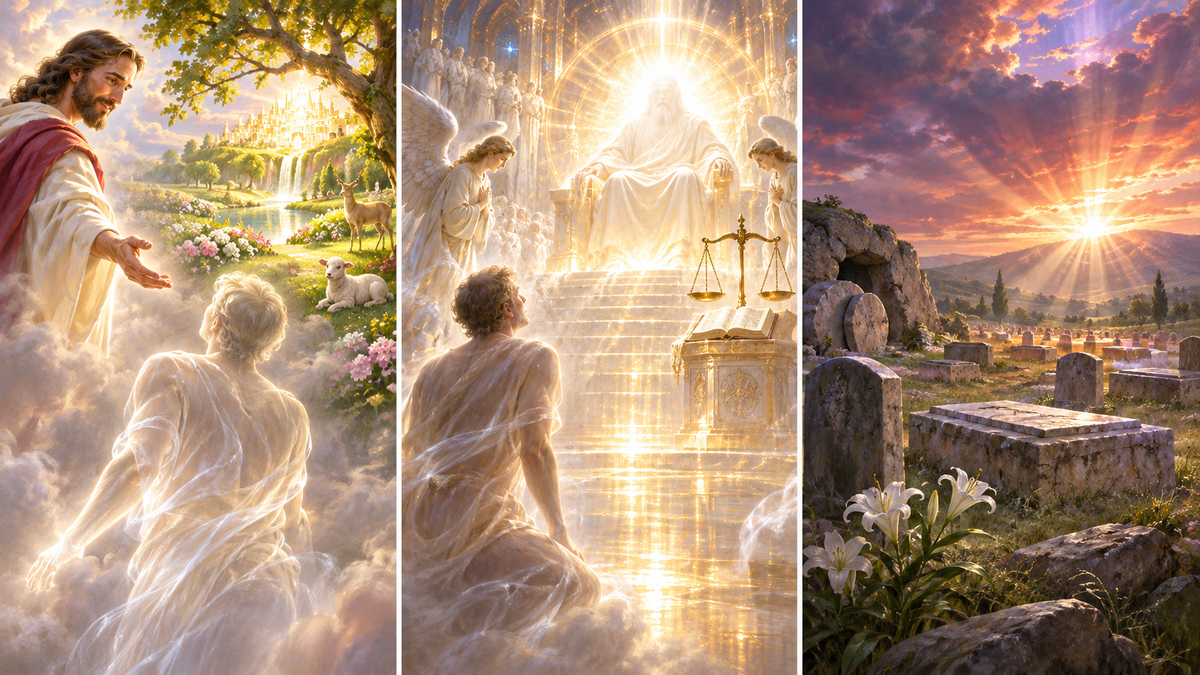
Many spiritual traditions describe the soul's journey after death as a series of stages. The details vary, but these phases appear again and again:
- Separation: At the moment of death, the soul departs the physical body. Some traditions say it may linger nearby for a time.
- Transition: The soul passes through an in-between state, which may include a review of its life, encounters with angels, guides, or loved ones, or a sense of light and peace.
- Judgment or Reflection: The soul's choices and character are weighed, whether by God, by the law of karma, or through its own self-reflection.
- Destination: The soul enters Heaven or Paradise, undergoes purification, is reborn into a new life, or rests until a future resurrection.
- Union or Liberation: In many traditions, the ultimate goal is unity with the divine or freedom from the cycle of rebirth.
Many funeral customs mirror these stages. The 40-day memorial observed in Eastern Orthodox Christianity and some Muslim communities, the 49 days of Tibetan Buddhist prayer, and the Jewish practice of saying Kaddish for eleven months all reflect beliefs about the soul's ongoing journey.
Personal Experiences and Spiritual Insights
Beyond doctrine and debate are the deeply personal stories families tell. Hospice nurses often describe patients who, in their final days, speak to loved ones who have already died, or who seem to be "packing for a trip." Grieving family members report vivid dreams, a sudden sense of presence, or meaningful signs such as a cardinal at the window or a favorite song on the radio.
Skeptics may attribute these experiences to the mind's way of coping. Others see them as evidence of the journey of the soul after death. Either way, these stories matter. They give comfort, help people say goodbye, and remind the living that love does not simply stop.
Resources for Exploring the Soul After Death
If you want to go deeper, many resources can help. You can watch a comprehensive video on the topic at this link. Our brand page and YouTube channel also offer a wealth of information, guidance, and support for families navigating loss.
Quick Tips (Short Videos)
How Beliefs About the Soul Shape Funerals
What a family believes about the soul often guides how they plan a funeral or memorial service:
- Readings and prayers: Christian services may include John 14 ("In my Father's house are many mansions"), while Hindu services may draw on the Bhagavad Gita's teaching that the soul is never born and never dies.
- Timing: Jewish and Muslim traditions typically bury the body quickly, often within 24 hours, out of respect for the deceased.
- Cremation or burial: Hindus and Buddhists commonly choose cremation, seeing it as releasing the soul, while some Christian and Muslim traditions prefer burial in anticipation of resurrection.
- Funeral programs: Many families include a favorite verse, prayer, or poem about the afterlife in the printed program, giving guests words of hope to carry home.
- Ongoing remembrance: Anniversary masses, memorial prayers, and ancestor rituals keep the connection between the living and the departed alive.
How to Find Comfort and Meaning
Thinking about the soul after death can stir up both fear and hope. If you are grieving, these steps may help:
- Lean on your faith or values: Return to the scriptures, prayers, or teachings that have guided you before.
- Talk with someone you trust: A pastor, imam, rabbi, chaplain, counselor, or grief support group can help you work through hard questions.
- Create rituals of remembrance: Light a candle, visit the grave, plant a tree, or set aside a day each year to honor your loved one.
- Write to your loved one: Many people find comfort in journaling or writing letters to the person they lost.
- Accept the mystery: You do not have to have every answer. Many find peace in trusting that love endures, even when the details remain unknown.
Frequently Asked Questions
Where does the soul go immediately after death?
It depends on the tradition. Many Christians believe the soul goes directly to be with God or awaits judgment. Islam teaches that the soul enters Barzakh, an intermediate state. Hinduism and Buddhism describe a transition toward rebirth.
Does the soul stay near the body after death?
Some traditions, including certain Christian, Islamic, and folk beliefs, hold that the soul remains near the body or home for a short time, often three to forty days. This belief is reflected in many memorial customs.
Can the soul of a loved one see us?
Many people believe their loved ones watch over them, and countless families report feeling a sense of presence. Religious teachings differ on this question, and science cannot confirm or rule it out.
Is there scientific proof of the soul?
No. There is currently no scientific proof that the soul exists or survives death. However, questions about consciousness remain open, and near-death experiences continue to be studied.
Further Reading and Support
For more information and resources, visit our brand page or explore our curated YouTube channel for related videos. You can also view the Google Doc version of this guide.
Conclusion
The journey of the soul after death remains one of humanity's greatest mysteries. Faith traditions offer paths of hope and promise. Science and philosophy keep asking hard questions. Personal experiences remind us that love and connection run deeper than we can fully explain. Whatever you believe, exploring these ideas can bring comfort in grief, courage in uncertainty, and a deeper appreciation for the precious time we share with the people we love. May this guide bring you insight and peace.