Mortuary vs Funeral Home: What’s the Difference and Which Should You Choose?

When someone you love dies, you are suddenly asked to make important decisions, often within hours. One of the first is where your loved one will be cared for and who will help you plan what comes next. As you start making calls, two terms come up again and again: mortuary and funeral home. Many people use them interchangeably, and in some communities they truly mean the same thing. But there are real differences in focus, facilities, services, and cost that can shape your family's experience.
This guide explains what a mortuary is, what a funeral home is, how they compare, what each typically costs, and how to choose the right fit for your family's needs, budget, and traditions. You will also find questions to ask before you sign anything, answers to common questions, and video and podcast resources to help you feel more confident during a difficult time.
Watch the Full Video Guide
What Is a Mortuary?
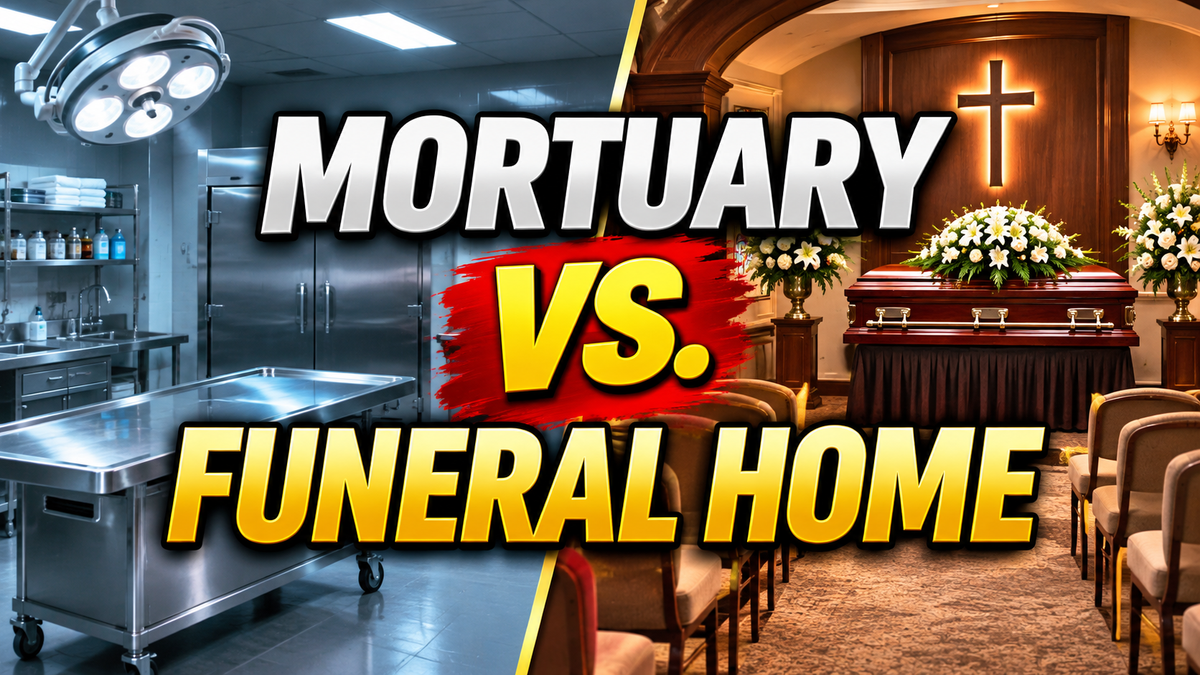
A mortuary is a facility focused on the physical care and preparation of the deceased. The word comes from the Latin mortuus, meaning "dead." Traditionally, a mortuary is where the technical work happens: receiving the body, refrigeration, bathing and dressing, embalming, and preparing remains for burial or cremation.
Mortuaries may operate independently or be connected to hospitals, medical examiner or coroner offices, crematories, or larger funeral businesses. A mortuary's primary concern is handling remains safely, respectfully, and in line with state laws. Many stand-alone mortuaries do not have chapels, visitation rooms, or reception spaces, and they may offer few or no ceremonial services.
Common mortuary services include:
- Transfer of the deceased from the place of death
- Refrigeration and temporary holding
- Embalming and cosmetic preparation
- Bathing, dressing, and casketing
- Arrangement of direct cremation or direct burial
- Filing of death certificates and transit permits
If your family wants a simple direct cremation or immediate burial without a formal service, a mortuary-focused provider can often be the most affordable and straightforward choice.
What Is a Funeral Home?
A funeral home offers a much broader range of services and guides families through the entire process from the first phone call to the final goodbye. In addition to caring for the body, funeral homes help plan and host services, coordinate with clergy and cemeteries, handle legal paperwork, and support families emotionally.
Most funeral homes include welcoming public spaces such as chapels, viewing or visitation rooms, arrangement offices, and reception areas where family and friends can gather. Many also have an on-site preparation room, which means they perform mortuary work themselves.
Common funeral home services include:
- Everything a mortuary provides, either on site or through a partner
- Funeral planning and arrangement conferences with a licensed funeral director
- Viewings, visitations, and wakes
- Funeral services, memorial services, and celebrations of life
- Coordination with churches, cemeteries, crematories, florists, and musicians
- Obituary writing and placement
- Caskets, urns, and memorial products
- Livestreaming of services for distant family
- Grief support resources and aftercare
- Pre-planning and pre-need arrangements
If you want a traditional funeral, a personalized memorial, or simply someone to walk alongside you through every step, a funeral home is usually the best fit.
Mortuary vs Funeral Home: Key Differences
| Feature | Mortuary | Funeral Home |
|---|---|---|
| Primary Focus | Technical care of the body (embalming, refrigeration, cremation preparation, legal paperwork) | Full-service funerals, memorials, family guidance, and grief support |
| Facilities | Preparation and holding areas; may lack chapels or viewing rooms | Chapels, viewing rooms, arrangement offices, and reception areas |
| Services Offered | Body preparation, direct cremation, direct burial | Funeral planning, ceremonies, viewings, obituaries, memorial products |
| Family Interaction | Limited, mostly logistical | Extensive, with personal guidance from a funeral director |
| Personalization | Minimal | Highly customizable services and tributes |
| Cost | Generally lower | Varies; often higher due to additional services |
Why the Terms Are Often Used Interchangeably
In everyday conversation, and even on business signs, you will see names like "Smith Mortuary" or "Johnson Funeral Home and Mortuary." In many states, both are licensed under the same category, often called a funeral establishment, and must meet the same legal requirements. Many funeral homes perform mortuary work on site, and some businesses called mortuaries offer full funeral services.
Regional habits play a role too. "Mortuary" is more common on the West Coast and in parts of the Southwest, while "funeral home" and "funeral parlor" are more common elsewhere. The lesson for families is simple: don't rely on the name alone. Ask exactly what services and spaces each provider offers.
Understanding Costs
Price is often one of the biggest factors in a family's decision. In general, a provider that offers only basic care and direct disposition will cost less than a full-service funeral with a viewing, ceremony, and graveside service. Costs vary widely by state, city, and provider.
In the United States, the Federal Trade Commission's Funeral Rule protects consumers. It requires funeral providers to:
- Give you a written, itemized General Price List when you ask in person about arrangements
- Share price information over the phone if you ask
- Let you choose only the goods and services you want, with a few legal exceptions
- Accept a casket or urn you purchased elsewhere without charging a handling fee
- Not claim that embalming is required by law when it is not
Comparing General Price Lists from two or three providers is one of the best ways to understand your options and avoid overspending.
Which Should You Choose?
Your decision between a mortuary and a funeral home depends on your family's needs, budget, and preferences.
A mortuary-focused provider may be the right choice if:
- You want a direct cremation or direct burial with no formal service
- You plan to hold your own memorial later at a church, home, park, or event space
- Keeping costs as low as possible is your top priority
- Your loved one asked for something simple
A full-service funeral home may be the better choice if:
- You want a viewing, visitation, or wake
- You plan a traditional funeral, homegoing, or religious service
- You want help coordinating every detail, from the obituary to the funeral program
- Your family would benefit from hands-on emotional support and guidance
- You need a space large enough to welcome many guests
Whenever possible, tour local facilities, ask about their offerings, read reviews, and trust your instincts about who treats your family with compassion and respect.
Questions to Ask Any Provider
- Can I have a copy of your General Price List?
- Do you perform embalming and cremation on site, or use a third party?
- Do you have a chapel or visitation room, and how many guests can it hold?
- What is included in your basic services fee?
- Do you offer package pricing, and can I remove items I don't need?
- Can you help with obituaries, programs, livestreaming, and flowers?
- What grief support or aftercare do you provide?
- Do you offer pre-planning, and how are pre-need funds protected?
Frequently Asked Questions
Can a mortuary also be a funeral home?
Yes. Many facilities offer both mortuary and funeral home services under one roof, but not all do. Always ask about the specific services and spaces provided.
Is one option more affordable?
Mortuary-focused services are generally less expensive because they include fewer services, but costs vary by location and provider. Always compare itemized price lists.
Do both handle cremation?
Yes. Both mortuaries and funeral homes can arrange cremation, but funeral homes may offer additional memorial options such as viewings before cremation, memorial services, and keepsake urns.
Is embalming required?
Usually not. Embalming is rarely required by law, though it may be required by a provider for a public viewing. Refrigeration is often an acceptable alternative.
Do I have to use a local funeral home?
No. You can choose any licensed provider, and you can compare prices across several before making a decision.
Expert Insights and Resources
To help you make an informed decision, we've created a detailed video guide on the differences between mortuaries and funeral homes. Watch the full video here for an in-depth explanation from industry professionals. You can also explore our YouTube channel for more educational content and support.
Quick Tips (Short Videos)
Additional Resources and Support
For more information, visit our support center or browse our YouTube channel for expert advice and helpful guides. If you'd like a shorter version of this article, view the Google Doc version.
To read the most comprehensive support article on this topic, read the full support article.
Conclusion
Understanding the differences between a mortuary and a funeral home can help you make the best choice for your family at a time when clear thinking is hard. A mortuary offers focused, often more affordable care for families who want simplicity. A funeral home offers full guidance, gathering spaces, and personalized ceremonies for families who want to honor their loved one in a more traditional way. Whatever you choose, ask questions, compare prices, and select a provider who treats your loved one, and your family, with dignity and care.