Homegoing Service History: A Complete Guide to the Tradition, Meaning, and Evolution

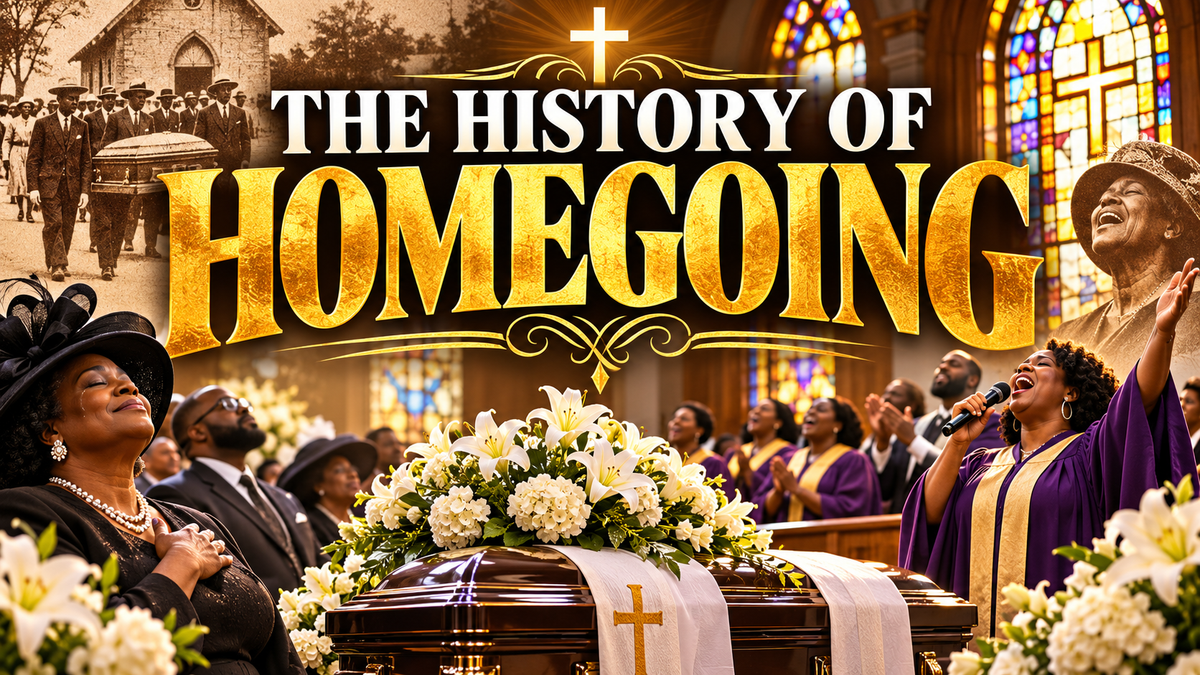
Few farewells carry the depth, joy, and spiritual conviction of a homegoing service. Rooted in faith and shaped by centuries of struggle and triumph, the homegoing tradition is one of the most meaningful expressions of African American culture. To understand homegoing service history is to understand a story of resilience, hope, and the unbreakable bonds of community.
In this complete guide, we trace the homegoing service from its origins during slavery, through emancipation and the church-centered traditions of the twentieth century, to the livestreamed and digitally shared ceremonies families hold today. Along the way, we look at the music, scripture, eulogies, and rituals that make a homegoing service unique, and at why this tradition continues to matter so deeply to families across generations.
Watch the Full Video Guide
What Is a Homegoing Service?
A homegoing service is a funeral or memorial service that celebrates a person's passage from earthly life to their eternal home with God. The name itself reflects the heart of the tradition: death is not seen as an ending, but as a going home. While there is grief, and tears are welcome, the overall tone is one of praise, gratitude, and hope.
Where many funeral traditions emphasize quiet solemnity, a homegoing service often feels like a worship service and a family reunion at the same time. Choirs sing, congregations respond, ministers preach with conviction, and families share stories that bring laughter as well as tears. The goal is to honor the life that was lived and to rejoice in the belief that the departed has finally found rest.
Origins of Homegoing Services
The roots of the homegoing service reach back to the era of slavery in America. Enslaved Africans carried with them rich spiritual beliefs from their homelands, many of which viewed death as a journey, a return to the ancestors or a crossing into the spirit world. For people who had been taken from their homes by force, the idea that death would bring them home carried powerful meaning. Some believed the spirit would return to Africa; others, as Christianity took hold, embraced the promise of heaven as their true home.
These beliefs gradually merged with Christian funeral practices. Because enslavers often restricted gatherings, early homegoing ceremonies were frequently held in secret or at night, sometimes in remote clearings sometimes called "hush harbors." These gatherings gave enslaved people a rare and precious space to mourn together, to sing, to pray, and to express hope without being watched.
Several elements we associate with homegoing services today began in this period:
- Spirituals – songs of sorrow, faith, and longing for freedom, many of which spoke of crossing over and going home.
- Call and response – a musical and spoken tradition with African roots that invited the whole community into worship.
- Communal mourning – the understanding that grief is shared, and that no family should carry a loss alone.
- Hope beyond suffering – the conviction that death brings release, rest, and reunion.
Over time, these ceremonies became a unique blend of African ritual and Christian faith, laying the foundation for the modern homegoing service.
Evolution Through Generations
After Emancipation
Following emancipation, homegoing services moved out of secrecy and into public life. Newly free communities built their own churches, and those churches quickly became the center of social, spiritual, and civic life. Funerals grew more elaborate as families gained the freedom to gather openly and honor their dead with dignity.
During this era, Black-owned funeral homes also began to emerge. Because many white-owned businesses refused to serve Black families, African American funeral directors became trusted community leaders, often among the most respected and financially independent members of their towns. They helped shape the customs of the homegoing service and ensured that families could say goodbye with care and respect.
The Twentieth Century
Through the Great Migration, the civil rights movement, and beyond, the homegoing service continued to evolve. Gospel music, which flourished in the early and mid-twentieth century, became a defining feature. Eulogies grew into powerful sermons that celebrated the departed while reminding the living of their faith. Repasts, the communal meals that follow the service, became beloved traditions that brought extended family and friends together.
The homegoing service also took on public significance. The funerals of civil rights leaders and community figures became moments of collective reflection and resolve, showing how a single service could honor one life while speaking to the hopes of an entire people.
Today
The focus has steadily shifted from mourning alone to celebrating the life, faith, and legacy of the deceased. As the African American community has faced new challenges and achieved new triumphs, homegoing services have reflected both resilience and joy. Today they remain a vibrant expression of cultural identity and spiritual belief.
Key Elements of a Homegoing Service
Every homegoing service is unique, shaped by the family, the church, and the personality of the person being honored. Still, several elements are commonly observed. The table below outlines the key components and their significance:
| Element | Description |
|---|---|
| Processional | Family members enter together, often led by clergy, as the congregation stands in respect. |
| Music | Gospel songs, spirituals, and hymns uplift the congregation and celebrate faith. |
| Scripture Readings | Passages from the Old and New Testaments offer comfort and hope. |
| Prayer | Prayers of comfort for the family and thanksgiving for the life lived. |
| Acknowledgments and Resolutions | Cards, condolences, and formal resolutions from churches and organizations are read aloud. |
| Tributes and Reflections | Family and friends share stories, memories, and personal tributes. |
| Eulogy | A minister delivers a sermon that honors the deceased and speaks hope to the living. |
| Viewing | A time for loved ones to pay their respects and say goodbye. |
| Celebration and Repast | The service concludes joyfully, followed by a shared meal for family and friends. |
The Role of Music
Music is the heartbeat of a homegoing service. A soloist's hymn can bring the congregation to stillness, and a full choir can lift the entire sanctuary to its feet. Classic selections such as "Precious Lord, Take My Hand," "Goin' Up Yonder," "I'll Fly Away," and "Soon and Very Soon" are frequently chosen, along with the departed person's favorite gospel songs. The music gives voice to both grief and joy, often in the same moment.
The Funeral Program
The printed funeral program, sometimes called an obituary program or order of service, holds a special place in the homegoing tradition. It typically includes a cover photo, the obituary, the order of service, photo collages, poems, and family acknowledgments. Many families keep these programs for decades as treasured keepsakes, and they become part of the family's history.
Modern Homegoing Services
Today, homegoing services continue to evolve, embracing new traditions while preserving their core values. Technology now allows families to livestream services for relatives who cannot travel, create digital tributes and memorial slideshows, and connect with loved ones around the world. Some families add personal touches such as themed attire, balloon or dove releases, motorcycle or horse-drawn processions, and video tributes that capture a loved one's personality.
The essence of the homegoing, however, remains unchanged: honoring the life, faith, and legacy of the departed in a way that uplifts the community. For a deeper look at the modern homegoing service, watch this long-form video guide or visit the Funeral Program Site YouTube Channel.
The Cultural Significance of Homegoing Services
Homegoing services are far more than funerals. They are affirmations of identity, faith, and resilience. They carry forward the memory of ancestors who found hope in the darkest of circumstances, and they remind each new generation of where they came from.
A homegoing service creates a space for collective mourning and collective celebration at the same time. It strengthens bonds within families, churches, and neighborhoods. The rituals and music offer comfort, while the stories shared ensure that the legacy of the departed lives on in those who remain.
For families planning a service, thoughtful preparation helps everything come together. That includes coordinating with clergy and the funeral home, choosing music, writing the obituary, and creating a program that truly reflects your loved one. For those seeking customizable funeral programs and professional support, the Funeral Program Site offers a wide range of options to honor your loved one's memory.
Planning a Homegoing Service: Helpful Tips
- Talk with the pastor early. The church and clergy often guide the order of service and can help with music and scripture choices.
- Choose meaningful music. Include the hymns and gospel songs your loved one cherished.
- Gather photos and stories. These bring the obituary, program, and tributes to life.
- Plan the repast. Many churches have hospitality ministries that help coordinate the meal.
- Consider a livestream. It allows distant family and friends to be part of the celebration.
- Order programs in advance. Allow time for proofreading and printing so every detail is right.
Listen: Homegoing Service History Podcast
Quick Tips (Short Videos)
Read the full support article
View the Google Doc version
Frequently Asked Questions
Why is it called a homegoing service?
The name reflects the belief that death is a return home, to God and to eternal rest. It is rooted in both African spiritual traditions and Christian faith.
How long does a homegoing service last?
Many homegoing services last between one and a half and three hours, depending on the music, tributes, and length of the eulogy.
What should I wear to a homegoing service?
Traditional attire is dark and formal, though many families now request white, a favorite color of the deceased, or themed clothing. When in doubt, follow the family's wishes.
Is a homegoing service sad?
There is grief, but the tone is largely celebratory. Expect uplifting music, heartfelt stories, and an emphasis on hope and faith.
Conclusion
The history of homegoing services is a testament to the enduring strength and spirit of the African American community. From secret gatherings during slavery to vibrant church celebrations and livestreamed services today, the homegoing tradition has carried faith, memory, and hope from one generation to the next. By blending tradition, faith, and celebration, these services continue to provide comfort, healing, and hope to families everywhere.
Whether you are planning a service for someone you love or simply wish to learn more, understanding homegoing service history deepens our appreciation for this beautiful and meaningful tradition.