What Happens to a Body in a Burial Vault Over Time? A Complete Guide

It's one of the quiet questions many families carry after a traditional burial but rarely say out loud: what actually happens to a body in burial vaults over time? Wanting to understand is natural. It can help you make informed choices and set aside myths that cause unnecessary worry.
This guide gently explains what burial vaults are designed to do, how they and other factors affect the natural process after death, what families can realistically expect, and the most common misconceptions.
Watch the Full Video Guide
What Is a Burial Vault?
A burial vault is an outer container placed in the grave to hold the casket. Most are made of steel-reinforced concrete, often with a plastic or metal liner and a sealed lid; some are made of metal. A simpler, less expensive option called a grave liner is usually unsealed and sometimes open at the bottom.
The main reasons cemeteries require an outer burial container are practical:
- Ground stability: It keeps the grave from sinking as the casket ages, so the ground stays level.
- Weight bearing: It supports the soil above and the heavy equipment used to maintain the grounds.
- A protective layer: It adds a barrier between the casket and the surrounding soil and water.
No state law requires a vault, but many cemeteries require either a vault or a grave liner. It's worth asking which your cemetery accepts.
A Gentle Look at the Natural Process
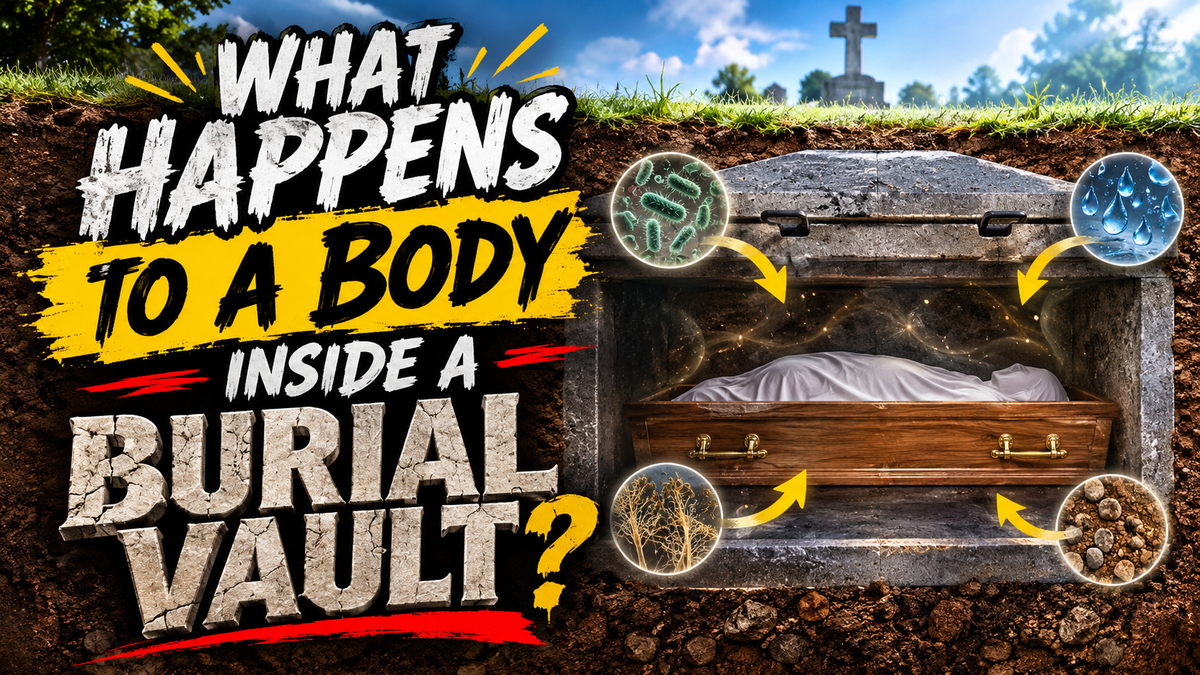
After death, the body naturally returns to the earth through decomposition, a process driven mostly by the body's own enzymes and by bacteria. Several things influence how quickly it happens:
- Embalming: Embalming temporarily slows the process so families can hold a viewing. It isn't designed for permanent preservation.
- Oxygen: Limited oxygen slows the process and shifts it toward slower, oxygen-free (anaerobic) breakdown.
- Moisture: Water generally speeds breakdown, while very dry conditions slow it.
- Temperature: Cooler soil slows the process; warmer conditions speed it up.
- Casket and vault: These limit contact with soil, insects, and microorganisms in the ground.
- Soil type and depth: Drainage, acidity, and how deep the grave is all play a role.
How a Vault Affects the Process
Because a vault and casket separate the body from the surrounding soil, the process inside a sealed vault is generally slower than in a natural burial, where the body is in direct contact with the earth. But a vault doesn't stop the process. Bacteria are already present in the body, so decomposition continues inside the vault, just at a different pace.
Conditions inside vaults vary. Many vaults aren't completely airtight, and some take on water over time, which changes the environment inside. That's why two burials in the same cemetery can look very different decades later.
| Burial Type | Pace of Natural Process | Key Considerations |
|---|---|---|
| Sealed vault with casket | Generally slowest | Stable, level ground; uses concrete and metal; conditions vary if water enters |
| Grave liner with casket | Slow to moderate | Prevents sinking but isn't sealed against water and soil |
| Natural (green) burial | Fastest | No vault, usually no embalming, biodegradable shroud or casket; returns to the earth naturally |
What Families Can Expect Over Time
Every burial is different, and there's no fixed timeline. In broad terms:
- The first weeks to months: Embalming slows changes at first, but the natural process continues, inside the casket, out of sight.
- The following years: Soft tissues gradually break down, typically through slow, low-oxygen processes inside a sealed vault.
- Many years to decades: Eventually, mostly skeletal remains are left. In a sealed casket and vault this can take considerably longer than in a natural burial, and the timing varies widely with conditions.
The casket itself also ages. Wood eventually softens and breaks down, and metal caskets can corrode, especially if moisture is present.
Common Myths About Burial Vaults
- Myth: A vault preserves the body forever. No vault or casket can do that. Under the Federal Trade Commission's Funeral Rule, funeral providers may not claim that a vault's protective features will preserve remains indefinitely.
- Myth: Vaults are completely airtight and waterproof. Many resist air and water, but none can be guaranteed sealed in every condition. Grave liners aren't designed to keep water out at all.
- Myth: Embalming is permanent. It's a temporary measure, mainly for viewing.
- Myth: The law requires a vault. Requirements come from individual cemeteries, not state law.
Environmental Considerations
Burial vaults use substantial amounts of concrete and steel, which take significant energy and resources to produce. For families who want a lighter footprint, there are options:
- Natural or green burial grounds, which typically prohibit vaults or allow only open-bottom alternatives
- Biodegradable caskets and shrouds made of materials like wicker, bamboo, pine, or cotton
- Skipping embalming, which most natural burial grounds require
- Cremation or water cremation, followed by burial of an urn or another memorial option
Finding Peace With the Process
For many people of faith, the body's return to the earth echoes ancient words like "dust to dust." For others, there's comfort in knowing a loved one is resting peacefully in a protected, well-kept place. Whatever you believe, understanding what really happens can replace vague fears with calm, informed choices.
Frequently Asked Questions
Does a burial vault stop decomposition?
No. A vault can slow the natural process by limiting contact with soil, water, and air, but it doesn't stop it.
How long does a body last in a burial vault?
There's no single answer. It depends on embalming, the casket, the vault's seal, moisture, temperature, and soil. Reaching mostly skeletal remains can take many years to decades.
Is a burial vault airtight?
Some are designed to seal well, but most aren't perfectly airtight forever, and some take on water over time.
Why do cemeteries require vaults?
Mainly to keep the ground level and stable for safety and maintenance. Many cemeteries accept a less expensive grave liner instead.
Are there eco-friendly alternatives?
Yes. Natural burial grounds, biodegradable caskets and shrouds, and cremation are all options for families who want a smaller environmental footprint.
Quick Tips (Short Videos)
Listen to the Podcast Episode
Prefer to listen? This episode of The Funeral Channel Podcast discusses how burial vaults work and what families should know about the process.
More Resources
- Watch the complete video guide on YouTube.
- Read the full support article.
- Download the printable Google Doc version.
- Visit The Funeral Program Site for burial options and funeral planning help.
- Browse our YouTube playlist for more educational videos.
Final Thoughts
A burial vault protects the grave and keeps the ground stable, and it can slow the natural process, but it doesn't stop it. Knowing that helps families set realistic expectations, recognize misleading promises, and choose the option that fits their values, whether that's a traditional vault, a simple grave liner, or a natural burial. If you have questions, your funeral director and cemetery are good places to start, and our resources are here whenever you need them.
About the Author: Christi Anderson is the founder of The Funeral Program Site and The Funeral Channel Network, and a published author dedicated to helping families navigate funeral planning and end-of-life traditions with compassion and clarity.