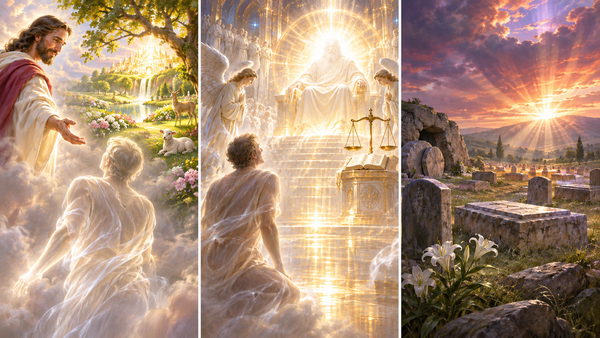
Why Catholics Pray for the Dead: A Complete Guide to the Tradition and Its Meaning

When someone we love dies, the desire to do something for them doesn't disappear. For Catholics, that love finds a lasting expression in prayer. Lighting a candle, having a Mass said, or whispering "Eternal rest grant unto them, O Lord" are all ways the Church keeps its departed members close. Yet many people, including some Catholics, aren't sure why Catholics pray for dead loved ones or what those prayers are believed to accomplish. In this complete guide, we explore the beliefs behind the tradition, its roots in Scripture and early Christian history, the many ways Catholics pray for the dead today, and the comfort this practice brings to grieving families.
Watch the Full Video Guide
The Communion of Saints: One Family in Christ
At the heart of this tradition is a belief Catholics profess every Sunday in the Creed: "I believe in the communion of saints." The Communion of Saints is the spiritual bond that unites all members of the Church, whether they are living on earth, being purified after death, or already in heaven. Catholics often describe these as three parts of one family:
- The Church on earth (sometimes called the Church Militant): the faithful who are still living.
- The Church being purified (the Church Suffering): souls in purgatory, preparing to enter heaven.
- The Church in heaven (the Church Triumphant): the saints who already see God face to face.
Because all three are united in Christ, Catholics believe death does not break the bonds of love. Just as we pray for one another in this life, we can continue to pray for those who have gone before us, and the saints in heaven can pray for us.
Purgatory: Hope, Not Fear
To understand why Catholics pray for the dead, it helps to understand the Church's teaching on purgatory. According to the Catechism of the Catholic Church (paragraphs 1030–1032), those who die in God's grace and friendship but are not yet fully purified are assured of eternal salvation. After death, they undergo a final purification so they can enter the joy of heaven.
Purgatory is not a second chance or a place of punishment like hell. It is better understood as a final cleansing, a completion of the work of God's love. Everyone in purgatory is already saved and on the way to heaven. Catholics believe that the prayers, Masses, and good works of the living can help these souls along that path. For this reason, the tradition is rooted in hope and trust in God's mercy, not in fear.
Biblical and Historical Foundations
Scripture
The passage most often cited is 2 Maccabees 12:38–46. After a battle, Judas Maccabeus discovered that some fallen soldiers had been carrying idols. He took up a collection and sent it to Jerusalem for a sacrifice on their behalf, and the text praises this act: "It is therefore a holy and wholesome thought to pray for the dead, that they may be loosed from sins." The books of Maccabees are part of the Catholic and Orthodox Bibles, though most Protestant Bibles do not include them.
Catholics also point to other passages that speak of purification after death, such as 1 Corinthians 3:13–15, which describes a person being "saved, yet so as by fire," and to the example in 2 Timothy 1:16–18, where St. Paul prays for Onesiphorus, who many scholars believe had already died.
The Early Church
Praying for the dead was a common practice among the first Christians. Ancient tomb inscriptions in the Roman catacombs ask passersby to pray for the person buried there. The second-century epitaph of Abercius, one of the oldest Christian inscriptions, closes with a request for prayers. Around the year 200, the writer Tertullian described Christians offering prayers and the Eucharist on the anniversaries of loved ones' deaths. In his Confessions, St. Augustine recalls his dying mother, St. Monica, asking only that he remember her at the altar of the Lord wherever he might be.
Other Faith Traditions
Catholics are not alone in this practice. Eastern Orthodox Christians pray for the departed through memorial services and special Saturdays of remembrance. In Judaism, mourners recite the Mourner's Kaddish and observe the yahrzeit, the anniversary of a loved one's death. Most Protestant traditions, however, do not pray for the dead, which is one reason the practice is sometimes misunderstood.
How Catholics Pray for the Dead
There are many ways to pray for a loved one who has died, from simple daily prayers to special Masses and devotions.
| Practice | Purpose | When Observed |
|---|---|---|
| The Eternal Rest prayer | Asks God to grant peace and rest to the deceased | Anytime, especially after a death and at the end of grace or the Rosary |
| Having a Mass offered | Unites prayers for the deceased with the sacrifice of the Mass, the Church's highest prayer | Anniversaries, birthdays, All Souls' Day, or any day |
| Gregorian Masses | A series of 30 Masses offered on 30 consecutive days for one person | Often begun soon after death |
| Mass cards | Let friends tell a grieving family that a Mass will be said for their loved one | Given at the wake or funeral, or sent to the family |
| The Rosary | Prayed for the soul of the deceased, often as a family or at the vigil | At the wake and anytime afterward |
| Lighting candles | Symbolizes prayers rising to God and Christ as the light of the world | In church, at home, or at gravesites |
| Visiting graves | An act of love and remembrance, accompanied by prayer | Especially November 1–8 and on anniversaries |
The Eternal Rest Prayer
The best-known Catholic prayer for the dead is short enough to memorize and pray anywhere:
Eternal rest grant unto them, O Lord,
and let perpetual light shine upon them.
May they rest in peace.
May their souls and the souls of all the faithful departed, through the mercy of God, rest in peace. Amen.
Many families include this prayer on funeral programs and prayer cards, so everyone who attends the service can carry it home and keep praying for their loved one.
Other Traditional Prayers
- The De Profundis (Psalm 130): "Out of the depths I cry to you, O Lord," a psalm traditionally prayed for the dead.
- The Prayer of St. Gertrude: a traditional devotion offered for the souls in purgatory.
- The Chaplet of Divine Mercy: often prayed at the bedside of the dying and for those who have died.
- Personal prayer: simply speaking to God in your own words about the person you miss is always a meaningful prayer.
All Souls' Day and the Month of November
The Church dedicates a special day, and an entire month, to praying for the dead. November 1 is All Saints' Day, honoring everyone in heaven. November 2 is All Souls' Day, when the Church prays for all the faithful departed. Many parishes celebrate a special Mass, read aloud the names of parishioners who died during the year, and invite families to bring photos or write names in a Book of the Dead displayed near the altar.
Throughout November, often called the Month of the Holy Souls, Catholics are encouraged to visit cemeteries and pray for the dead. The Church also grants indulgences for these acts. From November 1 to 8, a plenary indulgence, applicable only to the souls in purgatory, may be gained by devoutly visiting a cemetery and praying for the dead. It requires the usual conditions: going to confession, receiving Communion, praying for the Pope's intentions, and being free from attachment to sin.
Comfort for the Living
Praying for the dead is an act of love for the departed, but it also brings real comfort to those who grieve. Prayer gives mourners something meaningful to do when they feel helpless. It allows them to keep speaking a loved one's name, to remember them at every Mass, and to trust that the relationship has not ended. Many people find that praying for a parent, spouse, or child helps them move through grief with hope instead of despair.
The tradition also reminds Catholics that they will never be forgotten. Just as they pray for those who came before them, future generations will pray for them, an unbroken chain of love stretching across time.
How to Pray for a Loved One Who Has Died
- Request a Mass at your parish on their anniversary, birthday, or another meaningful date. Contact the parish office to schedule it.
- Add their name to your parish's Book of the Dead or All Souls' Day remembrance list.
- Pray the Eternal Rest prayer each day, perhaps at the end of your morning or evening prayers.
- Visit their grave, especially during November, and pray there.
- Light a candle at church or at home in their memory.
- Offer good works in their name, such as acts of charity, fasting, or volunteering.
- Keep a prayer card from their funeral in your Bible, missal, or wallet as a daily reminder.
Frequently Asked Questions About Why Catholics Pray for the Dead
Is praying for the dead biblical?
Catholics point to 2 Maccabees 12:38–46, which praises prayer and sacrifice for the dead, along with passages such as 1 Corinthians 3:13–15 and the consistent practice of the early Church.
Do prayers really help the dead?
Catholics believe that through the Communion of Saints, God allows the prayers and Masses of the living to help souls in purgatory complete their purification and enter heaven.
Do Catholics pray to the dead or for the dead?
Both, in different ways. Catholics pray for the souls in purgatory, asking God to grant them rest. They also ask the saints in heaven to pray for them, just as one might ask a friend for prayers.
Can non-Catholics pray for the dead?
Yes. Anyone can pray for a loved one who has died, asking God to grant them peace, mercy, and rest.
Explore More Resources
To learn more about why Catholics pray for dead loved ones, watch our full video guide or browse our Catholic Funeral playlist for more on Catholic traditions. For quick answers, watch these short videos: Why Catholics Pray for the Dead and Catholic Prayers for the Dead: Key Points.
Quick Tips (Short Videos)
Additional Support and Resources
For more information and support, visit our brand resource page, where you'll also find funeral programs and prayer cards that can include the Eternal Rest prayer. You can also read the Google Doc version of this article for a concise summary, or read the full support article.
Conclusion
The tradition of praying for the dead is one of the most tender expressions of Catholic faith. Rooted in Scripture, practiced since the earliest days of the Church, and grounded in the Communion of Saints, it connects the living and the departed in a bond that death cannot break. Whether you are Catholic, exploring the faith, or simply looking for a way to honor someone you love, a simple prayer for the dead offers hope, comfort, and the reassurance that love endures.