Catholic Funeral Mass: A Complete Guide to Traditions and What to Expect

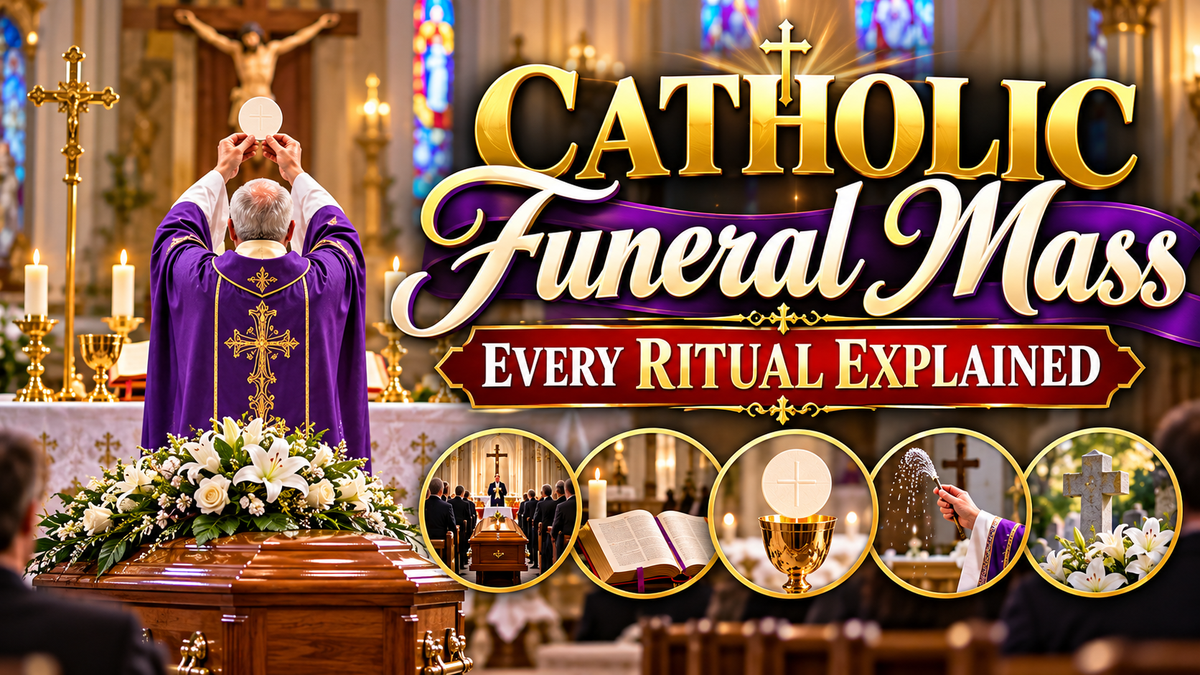
For Catholics, saying goodbye is an act of faith. The Catholic funeral Mass gathers family, friends, and the parish community to pray for the person who has died, give thanks for their life, and proclaim the hope of resurrection in Christ. It's both a farewell and a profound statement of belief that death is not the end.
Whether you're planning a funeral Mass for a loved one or attending one for the first time, this guide walks you through each part of the liturgy, the symbols and traditions you'll see, how families take part, what guests should know, and practical planning tips.
Watch the Full Video Guide
What Is a Catholic Funeral Mass?
A Catholic funeral Mass is the central rite of the Church's funeral liturgy. It's usually celebrated in the parish church by a priest, ideally with the body of the deceased present. In the United States, the Mass may also be celebrated with cremated remains present.
At its heart is the Eucharist, the same celebration Catholics share every Sunday, offered here for the person who has died. The Mass commends the deceased to God's mercy, comforts those who mourn, and reminds everyone present of the promise of eternal life.
The funeral Mass is one of three principal funeral rites in the Church's Order of Christian Funerals. It usually follows a Vigil (wake) and is followed by the Rite of Committal at the grave, mausoleum, or columbarium.
The Order of a Catholic Funeral Mass
| Part of the Mass | What Happens |
|---|---|
| Reception at the church | The priest greets the family and casket at the door and sprinkles the casket with holy water. A white pall may be placed over it. |
| Entrance procession | The casket is brought forward during an opening hymn, followed by the family. The priest offers an opening prayer. |
| Liturgy of the Word | An Old Testament reading, a responsorial Psalm, often a New Testament reading, the Gospel, a homily, and the Prayers of the Faithful. |
| Liturgy of the Eucharist | The gifts of bread and wine are brought forward, the Eucharistic Prayer is offered, and Holy Communion is distributed. |
| Words of remembrance (optional) | Where the parish allows, a family member or friend may speak briefly, usually after Communion. |
| Final Commendation and Farewell | The community prays in silence, the casket may be sprinkled and incensed, a Song of Farewell is sung, and the priest commends the person to God. |
| Procession | The casket is carried out of the church, often during the hymn In Paradisum ("May the angels lead you into paradise"), as the community accompanies it toward burial. |
A note on the homily and eulogies
The homily is preached by the priest or deacon. It may mention the person's life and faith, but its focus is God's mercy and the hope of resurrection. It isn't a eulogy. Longer personal tributes usually belong at the Vigil, the graveside, or a reception. Many parishes allow short words of remembrance at the Mass, but guidelines vary, so ask your parish first.
Symbols and Traditions
- Holy water: Recalls the person's baptism, when their life in Christ began.
- The pall: A white cloth placed over the casket, recalling the white garment of baptism and reminding everyone that all are equal before God.
- The Paschal candle: The large Easter candle placed near the casket, a sign of Christ's resurrection and the light of faith.
- Christian symbols: A crucifix, Bible, or Book of the Gospels may be placed on the casket.
- Incense: Honors the body as a temple of the Holy Spirit, and its rising smoke symbolizes prayers rising to God.
- Vestments: The priest may wear white (hope in the resurrection), violet (mourning and penance), or black.
- Music: Hymns and psalms chosen for their hope and comfort, such as "On Eagle's Wings," "Be Not Afraid," "I Am the Bread of Life," or "Here I Am, Lord."
How Family Members Can Participate
- Placing the pall on the casket at the beginning of the Mass
- Proclaiming the readings from the Old or New Testament
- Reading the Prayers of the Faithful
- Bringing up the gifts of bread and wine
- Serving as pallbearers or honorary pallbearers
- Offering brief words of remembrance, if the parish allows
Planning a Catholic Funeral Mass
- Contact the parish and funeral home early. The funeral home often coordinates the date and time with the church.
- Meet with the priest or parish planning team. Many parishes provide a planning booklet with approved readings and music.
- Choose the readings. Popular choices include Wisdom 3:1–9, Psalm 23, Romans 6:3–9, and John 14:1–6.
- Select music with the parish music director.
- Choose participants for the readings, intercessions, gifts, and pall.
- Prepare a funeral program listing the order of service, readings, hymns, and participants, so guests can follow along and keep a memento.
- Ask about offerings. A stipend for the priest, musicians, and parish is customary in many places; the funeral home can advise.
When a funeral Mass can't be celebrated
Funeral Masses aren't celebrated on certain days, such as Holy Thursday, during the Easter Triduum, on Sundays of Advent, Lent, and Easter, and on solemnities that are holy days of obligation. On those days, or when a Mass isn't otherwise possible, the Church offers a funeral liturgy outside Mass with readings and prayers but without the Eucharist.
Etiquette for Guests
- Dress modestly in subdued, respectful clothing unless the family requests otherwise.
- Arrive early so you're seated before the casket enters.
- Follow along. Stand, sit, and kneel with the congregation; if you prefer not to kneel, sitting quietly is fine.
- At Communion, Holy Communion is generally reserved for Catholics who are properly prepared. Non-Catholics may stay seated, or in many parishes come forward with arms crossed over the chest to receive a blessing.
- Silence your phone and avoid taking photos.
- Offer comfort to the family afterward with a few kind words. A Mass card, arranged through a parish so Masses are offered for the deceased, is a traditional and meaningful sympathy gift.
Frequently Asked Questions
How long does a Catholic funeral Mass last?
Typically about 45 minutes to an hour, depending on the music, number of communicants, and whether words of remembrance are included.
Can cremated remains be present at a funeral Mass?
Yes. The Church prefers the body be present, with cremation afterward if chosen, but in the U.S. a funeral Mass may be celebrated with cremated remains present. Ashes should then be buried or placed in a columbarium, not scattered or kept at home.
Can non-Catholics attend a Catholic funeral Mass?
Absolutely. Everyone is welcome to attend, pray, and sing. Communion is generally reserved for Catholics, but non-Catholics may come forward for a blessing in many parishes.
Is a eulogy allowed?
The homily isn't a eulogy. Many parishes permit brief words of remembrance near the end of Mass, while longer tributes are better suited to the Vigil or reception.
What's the difference between a funeral Mass and a memorial Mass?
A funeral Mass is celebrated with the body or cremated remains present. A memorial Mass is offered for the deceased when the remains aren't present, for example after burial has already taken place.
Quick Tips (Short Videos)
Listen to the Podcast Episode
Prefer to listen? This episode of The Funeral Channel Podcast explores the traditions, structure, and planning of a Catholic funeral Mass.
Embedded JavaScriptEmbedded iFrame
More Resources
- Watch the complete video guide on YouTube.
- Read our companion article on the Catholic funeral Mass.
- Read the full support article.
- Download the printable Google Doc version.
- Find funeral program templates and planning tools at The Funeral Program Site.
- Browse our YouTube playlist for more Catholic funeral videos.
Final Thoughts
The Catholic funeral Mass brings together grief and hope in a way few other moments can. Through Scripture, the Eucharist, and centuries-old symbols, it entrusts a loved one to God's mercy and reminds those who mourn that they don't grieve alone. Whether you're planning the Mass or attending in support of a grieving family, understanding its structure and meaning lets you take part with reverence and peace. Your parish priest and funeral director are there to help with every detail.
About the Author: Christi Anderson is the founder of The Funeral Program Site and The Funeral Channel Network, and a published author dedicated to helping families navigate funeral planning and end-of-life traditions with compassion and clarity.