Funeral Traditions Around the World: A Complete Guide to How Cultures Honor the Dead

Every culture on earth must face the loss of those it loves, yet the ways people say goodbye are astonishingly diverse. Exploring funeral traditions from around the world opens a window into how different societies understand life, death, and what may lie beyond. Some mourn in quiet reflection, others celebrate with music and dancing, and some keep their ancestors close for generations. In this complete guide, we travel across continents to explore some of the most meaningful and fascinating funeral customs, what they reveal about the people who practice them, and what they can teach all of us about grief and remembrance.
Watch the Full Video Guide
Why Funeral Traditions Matter
Funeral traditions are far more than ceremonies. They give grieving people a clear path to follow at a time when life feels uncertain. They bring communities together, offer comfort and structure, and provide a way to express love for someone who is gone. Many traditions also carry spiritual meaning, guiding the soul of the departed on its journey or ensuring the person is remembered by future generations.
Studying how other cultures approach death also helps us reflect on our own customs. Whether a culture views death as an ending, a transition, or a reunion with ancestors, its rituals reveal its deepest beliefs about family, faith, and the meaning of a life well lived.
Funeral Traditions Around the World at a Glance
| Country/Region | Tradition | Key Features |
|---|---|---|
| Ghana | Fantasy Coffins | Coffins shaped like objects that represent the person's life, work, or dreams |
| Japan | Otsuya and Kotsuage | Overnight wake, Buddhist rites, cremation, and family bone-picking ceremony |
| Tibet | Sky Burial | Body offered to vultures on a mountainside as a final act of generosity |
| Mexico | Día de los Muertos | Colorful altars, marigolds, offerings, and family celebrations honoring ancestors |
| Madagascar | Famadihana | "Turning of the bones," a joyful reburial ceremony with fresh burial cloths |
| Indonesia (Toraja) | Rambu Solo' | Elaborate multi-day funerals, sometimes held long after death, and cliffside graves |
| Philippines (Sagada) | Hanging Coffins | Coffins placed on cliff faces, believed to bring the dead closer to ancestral spirits |
| United States (New Orleans) | Jazz Funerals | Brass bands play somber hymns, then joyful music as mourners celebrate the life lived |
| Ireland | The Irish Wake | Loved one remains at home as family and neighbors gather to share stories, food, and song |
| India and Nepal | Hindu Cremation (Antyesti) | Open-air cremation, often led by the eldest son, and ashes immersed in sacred rivers |
Ghana's Fantasy Coffins
In Ghana, particularly among the Ga people of the Greater Accra region, funerals are grand celebrations that can draw hundreds of guests. One of the most striking traditions is the fantasy coffin, also known as an abebuu adekai, or proverb box. Skilled carpenters craft coffins in shapes that reflect the person's life: a fish for a fisherman, a cocoa pod for a farmer, a car for a driver, a Bible for a devoted churchgoer, or even an airplane for someone who dreamed of traveling.
These coffins are works of art, and many have been exhibited in museums around the world. More than a novelty, they express the belief that life continues after death and that the person should enter the next world honored for who they were. Funerals often include music, dancing, and gatherings that celebrate the person's achievements.
Japan's Otsuya and Bone-Picking Ceremony
Most Japanese funerals follow Buddhist traditions. The night before the funeral, family and friends gather for the otsuya, a wake where incense is offered and sutras are chanted. Traditionally, close family members would keep vigil through the night, though many modern wakes are shorter. Guests often bring koden, condolence money presented in special envelopes.
After the funeral, cremation takes place, as it does for nearly all deaths in Japan. Then comes one of the most intimate rituals in the world: kotsuage, the bone-picking ceremony. Family members use long chopsticks to lift the bones from the ashes and place them into an urn, often passing pieces between two people, beginning with the feet and ending with the skull so the person is upright in the urn. Because passing items chopstick-to-chopstick is reserved for this ritual, it is considered taboo at the dinner table in Japan.
Tibet's Sky Burial
In the high mountains of Tibet, where the ground is often too rocky or frozen for burial and firewood is scarce, many families practice sky burial, known as jhator, meaning "giving alms to the birds." The body is carried to a sacred site and offered to vultures. In Tibetan Buddhist belief, the soul has already departed, and the body is simply an empty vessel. Offering it to other living beings is seen as a final act of compassion and generosity, as well as a powerful reminder of impermanence.
Mexico's Día de los Muertos
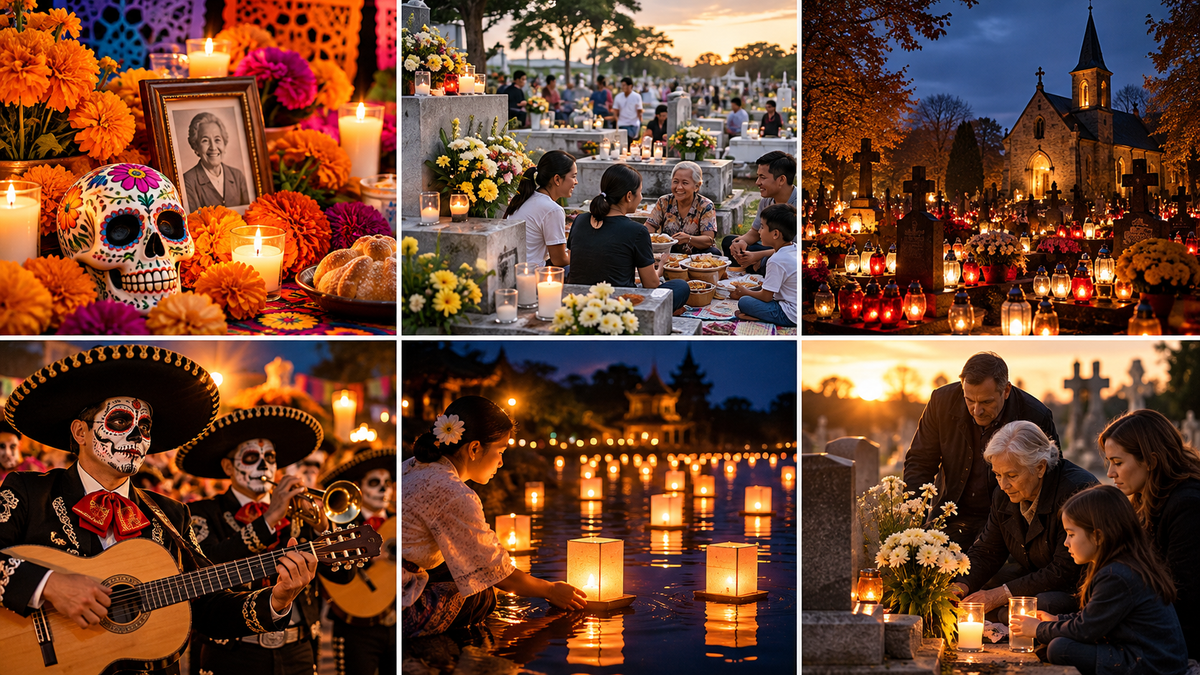
Día de los Muertos, or the Day of the Dead, is celebrated on November 1 and 2. Rather than a funeral, it is an annual remembrance when families welcome the spirits of their loved ones home. Families build ofrendas (altars) decorated with photographs, candles, sugar skulls, favorite foods, and bright orange marigolds, whose scent is believed to guide the spirits back. Cemeteries fill with families who clean and decorate graves, share meals, play music, and tell stories. The holiday transforms grief into a colorful, joyful reunion, and in 2008 it was recognized by UNESCO as part of the world's Intangible Cultural Heritage.
Madagascar's Famadihana
In the highlands of Madagascar, some families take part in Famadihana, the "turning of the bones." Every several years, relatives open the family tomb, carefully remove the remains of their ancestors, and rewrap them in fresh silk burial cloths. The ceremony is joyful, filled with music and dancing, and families may carry the wrapped remains above their heads as they celebrate. Names are written on the new shrouds so ancestors are never forgotten. For participants, Famadihana is a way of showing love and keeping a strong bond between the living and the dead.
Indonesia's Toraja Funerals
In the highlands of South Sulawesi, Indonesia, the Toraja people are known for some of the most elaborate funerals on earth. Because a proper funeral ceremony, called Rambu Solo', can be very expensive, families may wait months or even years to save for it. During that time, the deceased is cared for at home and regarded as someone who is ill rather than gone. The eventual ceremony can last days, with large gatherings, feasts, and processions. Remains are often placed in caves or cliffside tombs, sometimes watched over by carved wooden effigies called tau tau.
The Hanging Coffins of Sagada, Philippines
In the mountain town of Sagada in the northern Philippines, the Igorot people have practiced a centuries-old tradition of placing coffins on the sides of cliffs. Many believe that positioning the dead higher up brings them closer to their ancestral spirits and protects the remains. Though rarely practiced today, the hanging coffins remain a powerful symbol of cultural identity and respect for ancestors.
New Orleans Jazz Funerals
In New Orleans, jazz funerals blend African, European, and African American traditions into a uniquely moving farewell. A brass band leads the procession from the service to the cemetery, playing slow, mournful hymns. After the body is laid to rest, or "cut loose," the music shifts to upbeat, celebratory tunes, and mourners, along with the "second line" of community members who join in, dance through the streets. The tradition captures a powerful message: grief and celebration can coexist.
The Irish Wake
The traditional Irish wake is a gathering of family, friends, and neighbors, often held in the home of the deceased. Someone stays with the body day and night until the funeral, and guests come to pay respects, pray, share food and drink, and tell stories about the person's life. While wakes can be emotional, they are also known for warmth, laughter, and music, reflecting the Irish belief that a life should be celebrated as well as mourned.
Hindu Cremation Traditions
For Hindus, death is part of the cycle of rebirth, and cremation helps release the soul from the body. The ritual, called Antyesti (the last sacrifice), is usually held within a day of death. The body is washed, dressed, and adorned with flowers, and the eldest son or a close male relative often lights the funeral pyre. Varanasi, on the banks of the Ganges River in India, is considered an especially sacred place to be cremated. Ashes are commonly immersed in a holy river, and a mourning period of about 13 days follows, ending with rituals that help guide the soul onward.
Other Meaningful Traditions
- Jewish tradition: Burial takes place quickly, usually within a day or two, in a simple casket. Mourners then sit shiva for seven days at home, receiving visitors who bring comfort and food.
- Islamic tradition: The body is washed, wrapped in a plain white shroud, and buried as soon as possible, typically facing Mecca. Cremation is not practiced.
- South Korea: With limited burial space, some families choose to have cremated remains compressed into colorful beads displayed in the home.
- China: Many families observe Qingming, the Tomb-Sweeping Festival, cleaning ancestral graves and offering food, incense, and joss paper.
Modern Influences and Changing Customs
As the world becomes more connected, funeral traditions continue to evolve. Many families now blend customs from different backgrounds, especially in multicultural households. Eco-friendly options such as green burial, water cremation, and biodegradable urns are growing in popularity. Livestreamed services allow relatives around the globe to attend, while digital memorials and social media tributes keep memories alive online. Personalized celebrations of life, with favorite music, photo displays, and themed décor, are increasingly common.
Yet across all these changes, the heart of every tradition remains the same: honoring the person who has died and supporting the people who love them.
What These Traditions Teach Us
Looking across cultures, a few universal threads stand out. Nearly every tradition brings people together, because grief is easier to carry in community. Many celebrate the life lived as much as they mourn the loss. And almost all of them keep the memory of the departed alive, whether through annual festivals, family tombs, home altars, or stories passed down through generations. These lessons can inspire families anywhere as they plan a meaningful farewell for someone they love.
Frequently Asked Questions About Funeral Traditions Around the World
What are some of the most unique funeral traditions in the world?
Notable examples include Ghana's fantasy coffins, Japan's bone-picking ceremony, Tibet's sky burial, Madagascar's Famadihana, the Toraja funerals of Indonesia, the hanging coffins of Sagada in the Philippines, and New Orleans jazz funerals.
Is Día de los Muertos a funeral?
No. Día de los Muertos is an annual celebration held November 1 and 2 when families in Mexico honor and welcome back the spirits of loved ones who have died.
Why do some cultures celebrate at funerals?
Many cultures view death as a transition rather than an ending, so funerals focus on celebrating the person's life and sending them joyfully into the next world.
How are funeral traditions changing today?
Modern families increasingly choose personalized celebrations of life, eco-friendly burial options, livestreamed services, and digital memorials, often blending customs from several cultures.
Embedded JavaScript
Explore More Resources
For a deeper look at these rituals, watch our comprehensive video guide or find quick insights on our YouTube channel. You can also listen to the podcast episode below for a thoughtful discussion of funeral customs around the world.
Quick Tips (Short Videos)
Continuing the Conversation
Funeral traditions from around the world remind us that although grief is universal, the ways we honor our loved ones are as varied as humanity itself. Whether through artful coffins, joyful processions, family tombs, or quiet vigils, these customs help people find meaning and connection in times of loss. For more in-depth information, view the Google Doc version, or read the full support article.
Conclusion
From Ghana's fantasy coffins and Japan's bone-picking ceremony to Mexico's Day of the Dead and the jazz funerals of New Orleans, funeral traditions from around the world offer a window into the heart of each culture. These rituals honor the departed, comfort the living, and remind us that love does not end when life does. By learning about these customs, we gain a deeper appreciation for the many ways people around the world celebrate life and keep memories alive.